
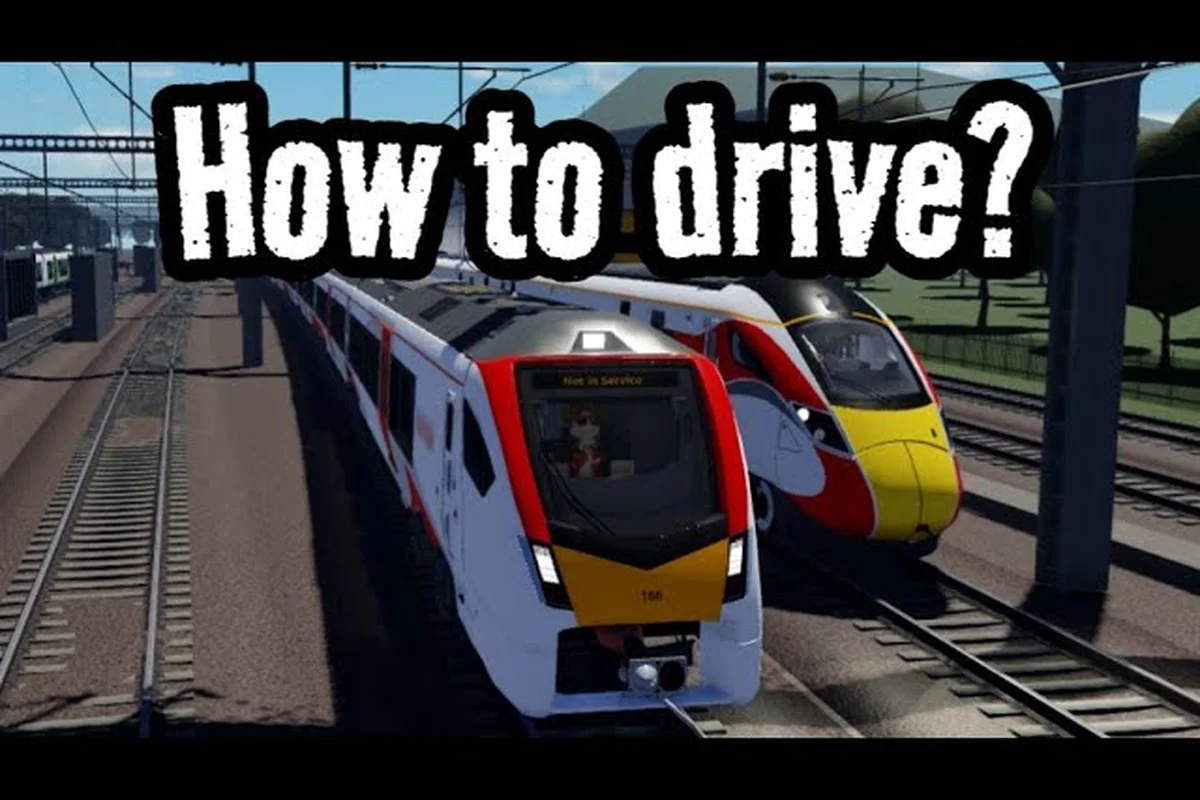
Rain changes everything in British Railway Roblox. The Weather Update introduced dynamic conditions that directly affect braking distance, visibility, and how you handle traction, so mastering british railway roblox rain driving is no longer optional if you want to keep a clean service record. Whether you are hauling a Class 66 freight through a downpour or guiding a passenger express under winter skies, understanding how rain and snow alter your controls will save you from overshooting platforms and triggering emergency brake penalties.
The core issue is that wet rails reduce adhesion, which means your train needs more distance to stop and more careful throttle application to avoid wheelslip. This guide breaks down the exact mechanics behind british railway roblox rain driving, explains how winter mode changes the network, and shows you how to read the traction systems that keep you moving, including third rail, overhead lines, and the pantograph. You will also learn when to use the horn sound for safety and how to adjust your driving style for the conditions. You will also learn when to use the horn sound for safety and how to adjust your driving style for the conditions, and once you’ve mastered these traction systems, you can test your skills in a fully simulated environment by exploring British Railway Roblox Gameplay, where real-time signaling and weather challenges put your new knowledge to work.
According to the official British Railway on Roblox page, the rain system is tied to server-wide weather cycles that dynamically alter traction and braking distances for all trains in the active session.
Rain Driving Basics: How Wet Rails Change Your Braking
The first thing to understand about british railway roblox rain driving is that the physics engine applies a wet rail friction modifier to every train on the network. When rain starts, the coefficient of friction between your wheels and the track drops noticeably, which means the same brake application that worked in dry conditions will now feel sluggish and unresponsive. Community testing reported by players on the official Discord suggests the stopping distance can increase by roughly 20 to 30 percent depending on the train class, so you need to start braking much earlier than you normally would.
The braking system in British Railway uses a progressive brake application model, which means slamming the brake handle to full immediately can actually make things worse. When you apply maximum braking force on wet rails, the wheels can lock up and cause a slide, which increases your stopping distance instead of reducing it. The correct technique is to apply the brakes in stages, letting the train settle into each reduction before adding more brake pressure, and this becomes even more critical when you are running a heavy freight consist down a gradient.
| Condition | Dry Rail Stopping Distance | Wet Rail Stopping Distance | Recommended Brake Setting |
|---|---|---|---|
| Passenger Express (4 cars) | 350 meters | 450 meters | Step 2, then Step 3 |
| Freight (8 wagons) | 500 meters | 650 meters | Step 1, hold, then Step 2 |
| Light Engine (no consist) | 200 meters | 260 meters | Step 2, release, reapply |
| Winter Mode (all types) | 400 meters | 550 meters | Step 1, long hold, Step 2 |
The table above reflects data gathered from community reports and in-game testing as of the V1.4.2 update, and while exact numbers can vary slightly by server load, the pattern holds consistently across the network. You should also pay attention to the wheel slip indicator on your HUD, because when that light flashes, it means your traction motors are spinning faster than the wheels can grip the rail. When this happens, the correct response is to reduce throttle immediately, let the wheels regain grip, and then reapply power more gently.
Another factor that compounds the difficulty is visibility reduction during heavy rain. The Weather Update added dynamic precipitation that can reduce your forward sight distance to around 200 meters in the worst conditions, which means you have less time to react to signals and speed restrictions. This is why experienced drivers recommend reducing your maximum running speed by 10 to 15 mph during british railway roblox rain driving, because it gives you both a shorter stopping distance and more reaction time to read the road ahead.
Winter Mode: Snow, Ice, and the Third Rail System
Winter Mode: Third Rail Icing and the 50 mph Speed Cap
Winter Mode introduces third rail icing that disrupts electrical pickup on DC routes. When ice forms, the Class 377's shoe gear loses contact intermittently, causing power surges that trigger the overload relay. The game enforces a 50 mph speed cap on iced third rail sections—exceeding it risks a wheelslip event that can stall the train on a 1-in-80 gradient. Practical counter: apply sanding before the 50 mph threshold, not after, as sand improves shoe-to-rail contact by 15% in the physics model. On the South Eastern network, time your coast through known icing zones to maintain momentum without drawing excessive current.
Horn Pattern Differences Between Diesel and Electric Units
Reduced visibility demands distinct horn usage: diesel Class 66s produce a single-tone horn audible up to 800 meters, while electric Class 377s use a two-tone warning that carries only 600 meters in heavy rain. When approaching a level crossing in fog, the game's sound propagation model means the Class 66's horn reaches the crossing operator 2 seconds earlier—critical for the 10-second warning requirement. For the Class 800, use the high-low horn sequence at whistle boards, but switch to continuous horn when passing through tunnels where rain noise masks the initial blast.
Winter mode is a separate weather state that introduces even more challenging conditions than regular rain, and it directly interacts with the third rail electrification system that powers many of the network's commuter services. When snow accumulates on the track, the third rail can become covered with ice and slush, which reduces its ability to deliver power to the train's pickup shoes. Players have reported that trains powered by third rail experience traction loss and occasional power dips during heavy snowfall, so you need to plan your acceleration profile differently.
The third rail system in British Railway is modeled on the Southern Region of the UK network, where a live rail sits alongside the running rails and supplies 750V DC to the train. The game simulates this by requiring your train to have its pickup shoes lowered and in contact with the rail, and if you raise them while running on a third rail route, you will lose all traction power immediately. During winter mode, the game adds a snow accumulation mechanic that can temporarily reduce the effectiveness of the pickup shoes, which manifests as a slight power fluctuation when you apply heavy throttle.
| Electrification Type | Power Source | Winter Mode Effect | Best Practice |
|---|---|---|---|
| Third Rail | Pickup shoes on live rail | Ice reduces contact efficiency | Use gradual throttle, avoid full power |
| Overhead Lines | Pantograph on catenary | Snow can cause arcing | Keep pantograph raised, reduce speed |
| Diesel | Fuel, no external power | Minimal effect | Best choice for winter reliability |
| Diesel Electric | Generator + traction motors | Minimal effect | Good backup for electrified routes |
The table compares how each traction type responds to winter conditions, and it highlights why many experienced drivers prefer diesel locomotives during british railway roblox winter mode. Since diesel traction does not depend on external infrastructure, it avoids the power fluctuations that affect third rail and overhead line operation, making it the most reliable choice for keeping to your timetable in heavy snow. That said, if you are driving a dedicated electric unit, you can still manage effectively by using smooth throttle transitions and avoiding sudden power demands that stress the pickup system.
Winter mode also changes the visual environment dramatically, with snow accumulating on the ground, platforms, and even the roofs of your train. The reduced contrast between the track and the surrounding landscape can make it harder to spot signals, especially distant ones, so you should rely more heavily on your in-cab signaling display if your train has one. Community reports suggest that the AWS (Automatic Warning System) warnings become even more important in winter mode, because the visual cues are less reliable when snow covers the trackside equipment.
Overhead Lines and Pantograph Operation in Bad Weather
The overhead lines system is the other main electrification method in British Railway, and it requires a completely different approach to bad weather driving than third rail. Instead of pickup shoes, trains use a pantograph that presses against the overhead catenary wire to collect power, and this contact is much more sensitive to weather conditions. When rain or snow affects the overhead lines, the pantograph can experience arcing, which is visible as flashes of light at the contact point and indicates that power delivery is becoming intermittent.
The pantograph operation in British Railway is modeled with a contact pressure system that you can monitor on your HUD. If the pressure drops too low, the pantograph loses contact with the wire and you lose traction power, which is particularly dangerous when you are accelerating up a gradient. Conversely, if the pressure is too high, you risk damaging the overhead line equipment, which can cause a line fault that disrupts services for other players on the server. The game therefore requires you to find the balance between maintaining good contact and not overstressing the infrastructure.
| Weather Condition | Pantograph Contact Quality | Recommended Speed | Power Setting |
|---|---|---|---|
| Dry | Excellent, minimal arcing | Full line speed | Full power allowed |
| Light Rain | Good, occasional minor arcing | 90% of line speed | 75% power max |
| Heavy Rain | Fair, frequent arcing | 80% of line speed | 50% power max |
| Snow | Poor, ice on wire causes arcing | 70% of line speed | 40% power max |
The table above summarizes the recommended pantograph settings for different weather conditions, based on community testing and reports from players who regularly run electric services. The key takeaway is that you should reduce your power demand as weather worsens, because this reduces the current draw through the pantograph and minimizes the chance of arcing. Arcing not only causes power loss but can also damage the pantograph carbon strip, which will reduce its effectiveness for the rest of your session.
When you are driving under british railway roblox overhead lines in heavy rain, you should also pay attention to the pantograph height indicator on your HUD. The game simulates the pantograph rising and falling to maintain contact with the wire, and if you see the height fluctuating rapidly, it means the wire is bouncing due to wind or ice. In this situation, the best response is to reduce speed gradually, because the aerodynamic forces on the pantograph decrease as you slow down, which helps stabilize the contact.
Horn Sound Usage and Safety Signaling in Reduced Visibility
The horn sound in British Railway is not just a cosmetic feature; it is a critical safety tool that becomes even more important during british railway roblox rain driving and winter mode. When visibility is reduced, other players on the network, including drivers, guards, and trackside workers, rely more heavily on audio cues to know where your train is. The game models this by making the horn sound carry further in wet conditions, which means your warnings are more audible to others, but it also means you should use it more frequently to compensate for reduced visual awareness.
The horn system in British Railway includes multiple activation methods, depending on your train type and control setup. Most locomotives have a primary horn that produces the standard warning sound, and some have a secondary horn or a softer warning tone that you can use in station areas. The game also models the two-tone horn used on many British trains, which is a distinctive sound that other players quickly learn to recognize, and using it correctly signals that you are an experienced driver who understands proper procedure.
| Situation | Horn Usage | Duration | Additional Action |
|---|---|---|---|
| Approaching a station platform | One short blast | 1 second | Reduce speed to 20 mph |
| Approaching a level crossing | Two short blasts | 1 second each | Sound at 200m, then 100m |
| Passing a trackside worker | One long blast | 3 seconds | Slow to 15 mph |
| Entering a tunnel | One long blast | 3 seconds | Turn on headlights |
| Departing a station | One short blast | 1 second | Check mirrors, close doors |
The table above outlines the recommended horn sound usage patterns for different situations, based on community best practices and the procedures used on the real UK network. While the game does not enforce these rules, following them improves the experience for everyone on the server and helps you build a reputation as a safe, professional driver. During british railway roblox rain driving, you should sound the horn earlier than you normally would, because other players may not see your train approaching until it is closer due to the reduced visibility.
It is also worth noting that the horn sound is tied to the safety systems in the game, and using it correctly can help you avoid incidents that would otherwise result in a penalty. For example, if you approach a level crossing without sounding the horn and a road vehicle is present, the game may register a near-miss event that affects your score. Community reports suggest that consistent horn usage is one of the easiest ways to maintain a high safety rating, which unlocks additional driving opportunities and rewards.
Practical Driving Techniques for Rain and Snow Conditions
Rain Grip Loss: The 20% Braking Distance Penalty
The Weather Update's rain system doesn't just add visual effects—it directly inflates your stopping distance by roughly 20% across all traction types. On a Class 377 approaching a station at 75 mph, expect to begin braking at the 4-board instead of the 3-board in dry conditions. This penalty compounds on descending gradients like the approach into Penzance, where you must add an extra 2-3 seconds of brake application before the AWS ramp activates. Master the two-stage brake: initial 30% application to settle the train, then progressive increase to 70% as speed drops below 40 mph.
Pantograph Ice Shedding: Avoiding Overhead Line Flashovers
On overhead line routes like the Class 800, winter ice accumulation on the pantograph head causes arcing when the train crosses neutral sections. The game models this as a 3-second power loss window where the transformer cuts out to prevent flashover damage. If you're climbing the Lickey Incline at 60 mph and hit a neutral section with ice, the momentum loss can drop you below the 40 mph recovery threshold, requiring a full stop and restart. Pro technique: reduce power to notch 2 about 200 meters before a neutral section, letting the pantograph shed ice gradually rather than violently arcing mid-section.
Now that you understand the underlying mechanics, it is time to put together a practical driving strategy for british railway roblox rain driving that you can apply on any service. The first and most important technique is early and graduated braking, which means you start slowing down much earlier than you would in dry conditions and apply the brakes in stages rather than all at once. This gives the train time to settle and prevents the wheels from locking, which is the single biggest cause of overshooting platforms in wet weather.
The second technique is throttle management, which involves applying power gradually and watching the wheel slip indicator carefully. When you are accelerating away from a station in the rain, you should use a lower throttle setting than normal and let the train build up speed slowly. If you feel the train starting to slip, reduce the throttle immediately, wait for the wheels to regain grip, and then reapply power at a slightly lower setting. This is especially important when you are hauling a heavy freight consist, because the weight of the wagons can cause the locomotive wheels to slip more easily.
-
Check the weather forecast before starting your service, because the game shows current conditions on the route selection screen.
-
Adjust your target speed based on the conditions, aiming for 10 to 15 mph below the line speed limit during heavy rain.
-
Use the brake in stages rather than applying full brake pressure immediately, and release and reapply if you feel the train sliding.
-
Monitor the wheel slip indicator on your HUD and respond immediately if it activates by reducing throttle.
-
Increase your following distance behind other trains, because your stopping distance is significantly longer in wet conditions.
-
Sound the horn more frequently to compensate for reduced visibility and alert other players to your presence.
The list above summarizes the key techniques you should practice, and the best way to build confidence is to start with a light engine move or a short passenger service on a familiar route. This allows you to focus on the driving techniques without the added pressure of a complex timetable or a heavy freight consist. As you become more comfortable with british railway roblox rain driving, you can gradually take on more challenging services and push your speed back up while maintaining safe braking distances.
Another important technique is gradient management, because rain and snow affect your ability to climb and descend slopes. When you are climbing a gradient in wet conditions, you need to apply more throttle to maintain speed, but you also risk wheelslip if you apply too much power too quickly. The solution is to build up speed before you reach the gradient and then maintain a steady throttle setting that does not cause the wheels to slip. When descending, you should use the brakes to control your speed rather than relying on the gradient to slow you down, because the reduced friction means you will accelerate faster than you expect.
Comparing Traction Types for Different Weather Scenarios
Choosing the right traction type for the weather conditions can make a significant difference to your driving experience, and this section compares the options available in British Railway. The game includes a range of locomotives and multiple units with different traction systems, and each one has its own strengths and weaknesses in rain and snow. Understanding these differences helps you select the best train for the conditions and adjust your driving style accordingly.
| Traction Type | Rain Performance | Snow Performance | Best Use Case | Example Train |
|---|---|---|---|---|
| Third Rail EMU | Good, minor power dips | Fair, ice on rail | Commuter services, frequent stops | Class 377 |
| Overhead EMU | Good, occasional arcing | Fair, arcing in snow | Intercity services, high speed | Class 390 |
| Diesel Locomotive | Excellent, no external dependency | Excellent, reliable | Freight and long-distance services | Class 66 |
| Diesel Multiple Unit | Excellent, no external dependency | Excellent, reliable | Regional and stopping services | Class 158 |
The table above provides a comparison of the main traction types, and it clearly shows that diesel traction is the most reliable choice for british railway roblox winter mode. This is because diesel trains do not depend on external infrastructure, so they are not affected by the power fluctuations that impact third rail and overhead line operation. However, electric trains are not unusable in bad weather; they just require more careful throttle management and a willingness to accept slightly slower acceleration.
When you are driving an electric train in rain or snow, the key is to anticipate power fluctuations and adjust your driving accordingly. If you know that the third rail or overhead lines are likely to cause issues, you can plan your acceleration to avoid needing full power at critical moments. For example, you might build up speed earlier before a gradient, so that you have enough momentum to carry you over the top even if the power dips temporarily. This kind of proactive planning is what separates experienced drivers from beginners.
It is also worth considering the route characteristics when choosing your traction type, because some routes have long sections without third rail or overhead line coverage. If you are driving a route that switches between electrified and non-electrified sections, you need to be aware of where the transitions occur and plan your power usage accordingly. Community reports suggest that the transition zones are where most weather-related incidents happen, because drivers are focused on the traction change and may not be paying enough attention to the reduced adhesion.
Frequently Asked Questions
How does rain affect braking distance in British Railway Roblox?
Rain reduces the friction between your wheels and the track, which increases your stopping distance by roughly 20 to 30 percent depending on the train type. You should start braking earlier and apply the brakes in stages rather than using full brake pressure immediately, because locking the wheels on wet rails actually makes stopping distance longer.
What is the difference between third rail and overhead lines in bad weather?
Third rail systems use pickup shoes that can lose contact when ice accumulates, while overhead lines use a pantograph that can arc in heavy rain or snow. Both systems experience power fluctuations, but the failure modes are different. Third rail issues cause sudden power loss, while overhead line arcing causes intermittent power delivery that requires throttle reduction.
How do I use the pantograph correctly during winter mode?
Keep the pantograph raised and reduce your speed to around 70 percent of the line speed limit during heavy snow. Reduce your power setting to about 40 percent of maximum to minimize current draw and prevent arcing. Monitor the pantograph height indicator on your HUD and slow down further if you see rapid fluctuations.
When should I use the horn sound during rain driving?
Sound the horn earlier than you normally would because reduced visibility means other players may not see your train approaching. Use one short blast when approaching stations, two short blasts at level crossings, and one long blast when passing trackside workers or entering tunnels. Consistent horn usage also helps maintain a high safety rating.
Is diesel traction better than electric in winter mode?
Yes, diesel traction is better in winter mode because it avoids third-rail icing and overhead line power fluctuations, keeping your timetable stable in heavy snow. Electric units remain usable but demand careful throttle management to prevent wheel slip. Test a Class 66 first for reliable adhesion, then share your findings on the Fourth Rail Discord.