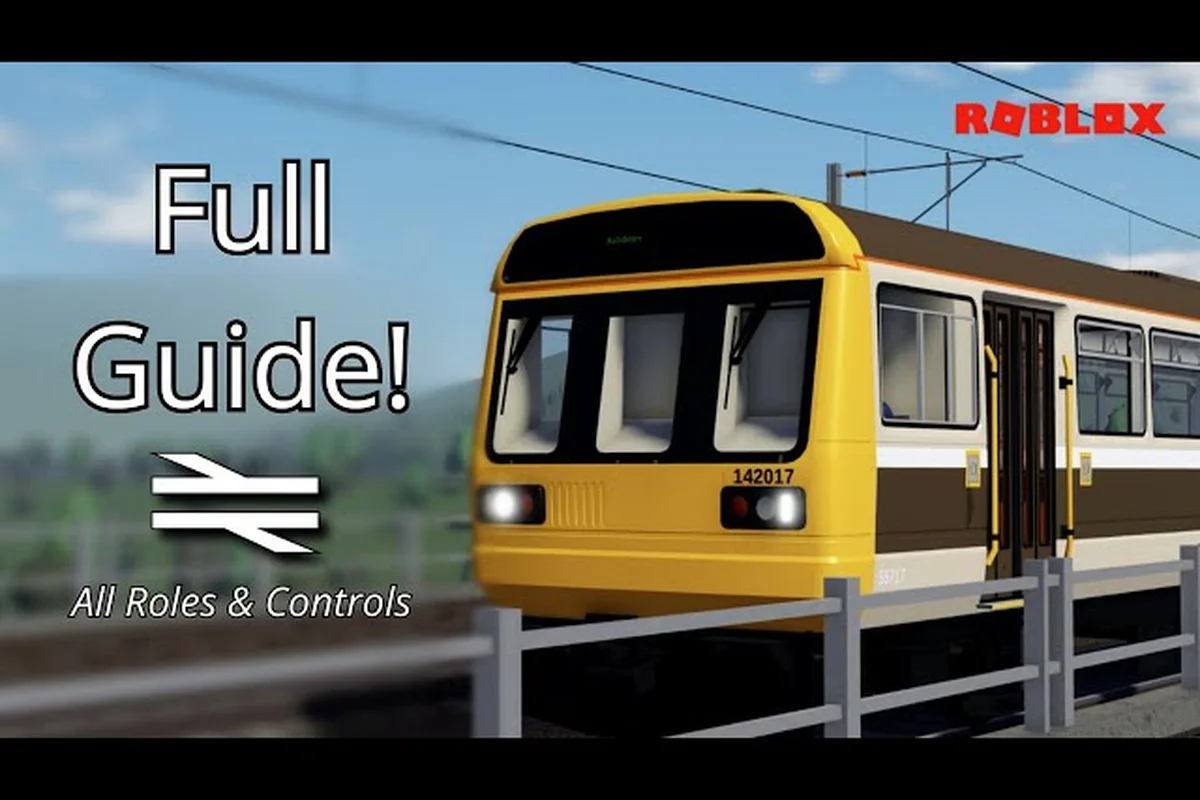
Starting a new game in British Railway can feel overwhelming because the simulation expects you to understand signaling, braking distances, and passenger flow before you ever leave the depot. These British Railway Roblox beginner tips focus on the five mistakes that cause the most frustration for new drivers, from overshooting platforms to ignoring the guard role entirely. Learning these fundamentals early will save you hours of grinding and help you earn credits faster, which matters because the game's economy rewards reliable service over reckless speed.
The game, created by the verified Fourth Rail group, has grown to over 35.9 million visits with roughly 2,000 concurrent players, so you are joining a busy network where other drivers depend on your competence. Whether you want to master the Class 43 HST or simply run a clean commuter service, the advice below applies to every traction type and route length. Let's get you from confused rookie to dependable driver without wasting your first shift.
The Five Beginner Mistakes That Derail Your Progress
Every new player hits the same wall of confusion during their first few sessions, and the difference between those who stick with the game and those who quit often comes down to a handful of correctable errors. Community reports from the official Discord and the game's 87% positive rating suggest that most frustration stems from preventable mistakes rather than unfair mechanics. Understanding these five pitfalls before you spawn your first train will give you a massive head start over players who learn the hard way.
The most common British Railway Roblox beginner mistakes fall into predictable categories that experienced drivers recognize instantly — control errors, speed management, role awareness, economy decisions, and navigation. Here is what you need to watch for:
-
Skipping the tutorial prompts because you assume train simulators work like arcade racers, which leads to confusion about door controls and brake pressure.
-
Driving at maximum speed at all times without accounting for the fact that stopping distances on this game's tracks are much longer than you expect, especially with older rolling stock.
-
Ignoring the guard role when playing with friends, which means passengers never get checked and you miss out on the full gameplay loop that makes this simulator unique.
-
Spending credits on the wrong first train because you chased a shiny Class 43 HST instead of learning the network with a cheaper, more forgiving unit.
-
Failing to read the route map before departure, so you miss station stops and end up reversing for several minutes while passengers complain.
Each of these mistakes costs you time, credits, and reputation within the community, and together they explain why so many drivers quit during their first week. The good news is that all five are completely avoidable with the right preparation, and the sections below break down exactly how to fix each one.
Mastering the Braking System Before You Speed Up
The single biggest skill gap between new and experienced drivers in British Railway is braking technique, because the game simulates real-world physics rather than the forgiving mechanics found in arcade train games. When you apply the brake at full service pressure, the train decelerates gradually, and if you wait until you can see the platform before braking, you will almost certainly overshoot it. This is the number one reason new drivers miss their stops, and it directly ties into the British Railway Roblox beginner tips about route planning and speed management.
Understanding Brake Pressure and Stopping Distance
The braking system in British Railway uses a percentage-based brake gauge that you control with the B key or the on-screen slider, and the relationship between brake pressure and stopping distance is not linear. At 25% brake pressure, you barely slow down, while at 100% you risk wheel slip on wet rails. The sweet spot for most approaches is around 60-75% pressure applied early, then releasing to 25% as you roll into the platform.
| Train Type | Approach Speed | Brake Application Point | Final Brake Pressure |
|---|---|---|---|
| Class 150 (DMU) | 60 mph | 400 meters before platform | 30% for final stop |
| Class 43 HST | 100 mph | 800 meters before platform | 40% for final stop |
| Class 90 (Electric) | 90 mph | 650 meters before platform | 35% for final stop |
These distances come from community testing reported by experienced drivers on the Fourth Rail Discord, and they assume dry weather conditions. When rain or snow is active, you should add roughly 20% to the braking distance because the wheel-rail adhesion drops significantly. The game's V1.4.2 Western Update introduced more pronounced weather effects, so you cannot rely on the same braking points in every session.
Practicing the Two-Stage Brake Technique
The most reliable method for stopping accurately is the two-stage brake technique, which experienced players use on every route regardless of traction type. Start by applying 70% brake pressure when you hit your braking point, which brings the speed down quickly while maintaining control. As you approach the platform starter signal, reduce pressure to around 30% to smooth out the deceleration and avoid jerking passengers around.
The final stage involves releasing the brake completely about 50 meters from the stop mark and letting the train coast to a halt, then applying a light 10% pressure if you need to fine-tune your position. This technique takes about ten practice runs to internalize, but once you master it, you will stop within a meter of the marker every time. New drivers who skip this practice end up frustrated, which is why it ranks among the most important British Railway Roblox beginner tips for anyone who wants to drive passenger services reliably.
Choosing the Right First Train Without Wasting Credits
Your first train purchase sets the tone for your entire early game, and making the wrong choice can set you back thousands of credits that take hours to earn back. The game's economy is designed so that starter trains are cheap for a reason: they teach you the fundamentals without punishing you for mistakes. Many new players ignore this design philosophy and blow their entire savings on a high-speed intercity unit they cannot handle yet.
Comparing Starter Options by Value
The current roster offers several entry-level trains, but they are not all created equal when it comes to forgiving driving characteristics and earning potential. According to the game's official Roblox page, the Class 150 diesel multiple unit is the recommended starting point because it has modest speed, responsive braking, and low operating costs. The Class 43 HST, while iconic and featured heavily in the Western Update marketing, demands precise braking and costs significantly more.
| Train | Purchase Price | Top Speed | Best For | Risk Level |
|---|---|---|---|---|
| Class 150 | 8,000 credits | 75 mph | Learning routes and signals | Low |
| Class 170 | 15,000 credits | 100 mph | Commuter services with frequent stops | Medium |
| Class 43 HST | 45,000 credits | 125 mph | Fast intercity runs once skilled | High |
The price data reflects the current economy as of the V1.4.2 update, and community reports suggest the developers may adjust values in future patches. If you are wondering how to get good at British Railway Roblox without burning through your savings, the answer is simple: buy the Class 150 first, learn every route on the network, and only upgrade when you can complete a full service without missing a stop.
The Rental Alternative for Testing Trains
Before you commit credits to any purchase, the game offers a rental system that lets you try trains for a fraction of the purchase price. Renting a Class 43 HST for a few runs costs around 2,000 credits, which is a fraction of the 45,000 credit purchase price, and it lets you feel the braking characteristics firsthand. This is one of the smartest British Railway Roblox beginner tips because it prevents buyer's remorse and helps you understand which train matches your driving style.
Renting also helps you learn the route network without financial risk, because you can take a high-speed train on a route you have never driven and make mistakes without losing your investment. Once you find a train that feels right, you can save up for the purchase knowing exactly what you are getting. The rental system is underused by new players, which is a shame because it solves the most common economic mistake in the game.
Guard Role Basics and Passenger Interaction
British Railway is not just about driving trains, because the game includes a full guard role that lets you check tickets, control doors, and manage passenger flow at stations. Many beginners skip this role entirely, which means they miss out on a significant portion of the gameplay and also fail to understand what their fellow players are doing when they play as guards. Learning the guard role makes you a better driver because you understand the full service loop from both sides.
The Ticket Checking Workflow Explained
When you play as a guard, your primary responsibility is to check tickets before departure and control the doors at each station stop. The workflow starts when passengers board, at which point you walk through the carriages and press the interaction key on each passenger to verify their ticket. Passengers without valid tickets trigger a penalty, and you must escort them off the train before departure.
-
Check tickets before the departure timer expires, because the train cannot leave until every passenger is verified.
-
Control doors with the door control panel, which opens and closes each carriage door independently.
-
Signal the driver when the platform is clear, using the intercom system to confirm safe departure.
-
Handle disputes calmly, because some passengers will try to argue, and the game tracks your resolution efficiency.
The guard role pays credits based on how many tickets you check and how smoothly you manage the service, and experienced guards report earning nearly as much as drivers on busy routes. If you want to understand the full British Railway Roblox everything you need to know about roles, the guard guide breaks down the advanced techniques that separate average guards from great ones.
Why Door Control Matters More Than You Think
Door control is the most error-prone part of the guard role, because opening doors too early or closing them too late creates safety violations that cost you credits. The game simulates the real-world rule that doors must only open when the train is fully stopped and platformed, and closing them requires a visual check of the platform edge. New guards often rush this process, which leads to penalties and frustrated passengers.
The best approach is to develop a consistent routine: confirm the train has stopped completely, check the platform side indicator, open all doors simultaneously, then monitor the boarding flow. When the departure timer approaches, close doors in sequence from the far end of the train toward the driver's cab, which prevents passengers from being trapped between carriages. This routine becomes second nature after a few shifts, and it makes you a valuable crew member on any service.
Reading the Route Map and Planning Your Stops
The British Railway network has expanded significantly with the Western Update, and the current map includes multiple branches, viaducts, and station types that require different driving approaches. New players who skip the route map and just follow the signal indicators often end up confused about which platform to use or which branch to take. The route map is your primary navigation tool, and learning to read it effectively is one of the most valuable British Railway Roblox beginner tips.
According to the official British Railway game page on Roblox, the game's core mechanics center on realistic train driving, signaling, and a passenger system that rewards you with in-game currency for completing routes on time. That currency feeds directly into buying your first train, which is why route planning and punctual stops matter so much while you are still learning the game.
Key Route Features and What They Mean
The route map displays the entire network with color-coded lines that indicate service types, station markers that show platform numbers, and gradient indicators that warn you about steep sections. The Western Update added the Pencarn extension, which features a notable viaduct section that requires careful speed management because the gradient affects braking distance significantly.
| Route Feature | Map Symbol | Driving Impact |
|---|---|---|
| Station stop | Circle with platform number | Brake to full stop, open doors |
| Viaduct | Bridge icon | Reduce speed to 40 mph max |
| Tunnel | Dashed line | Headlights required, reduce speed |
| Junction | Split arrow | Check signal before proceeding |
Understanding these symbols before you depart means you can plan your braking points in advance rather than reacting to them mid-route. The game's HUD also displays a speed limit indicator that changes based on your location, and experienced drivers report that respecting these limits is essential for avoiding penalties. If you want a complete breakdown of the interface and controls, the British Railway Roblox guide 2026 covers every HUD element and keybind in detail.
Planning Your Approach to Each Station
The most efficient drivers plan their entire route before departure, identifying each station stop, the platform they need, and any speed restrictions along the way. This planning takes about two minutes at the start of a shift but saves far more time during the actual run because you never have to second-guess your approach. The route map also shows the distance to the next station, which helps you calibrate your braking points.
For the Pencarn extension specifically, community reports highlight that the viaduct approach requires you to reduce speed well before the bridge icon appears on your HUD. The gradient causes the train to accelerate on the descent, so you need to apply brakes earlier than you would on flat track. These route-specific nuances are exactly why the British Railway Roblox beginner mistakes list includes failing to study the map, because every route has its own character and challenges.
Building Good Habits for Long-Term Success
The difference between players who improve quickly and those who plateau often comes down to the habits they build during their first week of play. British Railway rewards consistency and attention to detail, so developing a solid routine early will pay dividends throughout your time with the game. These habits go beyond individual mechanics and touch on how you approach the game as a whole.
Creating a Pre-Departure Checklist
Before every departure, experienced drivers run through a mental checklist that covers the essentials: route confirmed, brake test completed, doors closed, and signals checked. This routine takes about thirty seconds but prevents the majority of common errors that plague new players. The brake test is particularly important because it verifies that your train's braking system is functioning correctly before you leave the station.
-
Confirm your route and next stop on the map screen before moving off.
-
Test the brakes by applying 50% pressure and checking the response.
-
Verify all doors are closed using the door indicator panel.
-
Check the departure signal to confirm you have permission to leave.
This checklist becomes automatic after a few sessions, and it ensures you never depart without the information you need. Players who skip this routine often find themselves mid-route with no idea which platform they need or whether their brakes are responding correctly, which leads to the exact mistakes that frustrate other passengers.
Learning From Every Mistake
No player becomes proficient at British Railway without making mistakes, and the key is to treat every error as a learning opportunity rather than a reason to quit. When you overshoot a platform or miss a signal, take a moment to analyze what went wrong and adjust your approach for the next run. The game's penalty system provides feedback on what you did wrong, and reading those messages carefully will accelerate your improvement.
The community is generally supportive of new players who show willingness to learn, and the official Discord has channels dedicated to helping beginners improve. If you are stuck on a specific mechanic or route, asking for advice there will get you answers from experienced players who have already solved the same problems. This community support is one of the reasons British Railway has maintained such a positive rating despite its complexity, and it is a resource you should use freely.
Frequently Asked Questions
What is the best first train for British Railway Roblox beginners?
The Class 150 diesel multiple unit is the best first train because it costs only 8,000 credits, has forgiving braking characteristics, and teaches you the fundamentals without punishing mistakes. Rent it first to confirm it suits your style, then purchase once you feel comfortable with the handling.
How long does it take to learn British Railway Roblox controls?
Most players feel comfortable with the core controls within two to three hours of play, but mastering advanced techniques like two-stage braking takes closer to ten hours. The learning curve is steepest during your first few shifts, so expect some frustration before things click into place.
Can I play British Railway Roblox on mobile devices?
Yes, the game supports mobile platforms, but the controls are more challenging than on PC because you lose the precision of keyboard inputs. Mobile players should start with the Class 150 and focus on routes with fewer stops to reduce the amount of precise braking required.
Do I need to buy a train to play British Railway Roblox?
No, you can play as a guard or passenger without owning a train, and the game provides free trains for certain roles. However, owning your own train unlocks the full driver experience and allows you to earn credits at a much faster rate.
What happens if I miss a station stop in British Railway Roblox?
Missing a station stop triggers a penalty that reduces your credits and adds a delay to your service. You can reverse to the missed platform, but this costs additional time and may cause you to miss your next scheduled departure.