
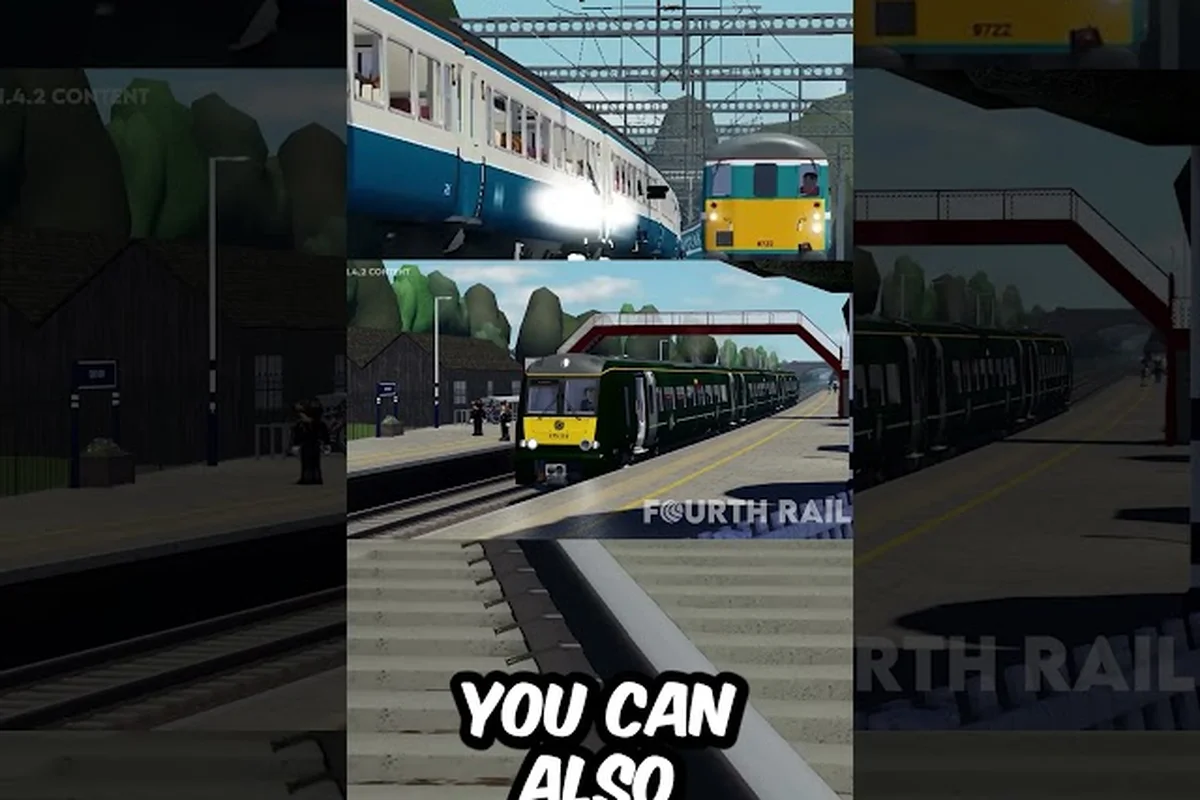
The British Railway Roblox class 175 update arrived as part of V1.4.2 "The Western Update" on August 8, 2026, and it fundamentally reshaped how local stopping services work on the Pencarn extension. This patch introduced the Class 175 DMU as a quirky addition for branch-line operations, while simultaneously rolling out weather effects that alter braking distances and third-rail performance across the map. If you are trying to decide whether the class 175 update is worth your grinding time or how it stacks against the Class 43 HST changes, this breakdown covers the mechanical shifts, route additions, and practical driving adjustments you need.
The update matters because it changed the risk-reward balance for local services, introduced new weather-driven driving techniques, and expanded the Western region with coastal scenery that affects route learning. Community reports from the official Fourth Rail Discord indicate that the weather system alone has forced experienced drivers to relearn braking points on wet rails. Below, we break down every major change in the British Railway Roblox class 175 update, compare it with the class 43 intercity additions, and give you actionable tips for mastering the new conditions.
Class 175 Update Highlights and What Changed in V1.4.2
The British Railway Roblox class 175 update is the centerpiece of the Western Update, but it is not the only significant addition in this patch. Fourth Rail shipped a complete package that includes the Class 175 DMU for stopping services, the Class 43 HST for intercity express work, a new Pencarn extension with coastal routes, and a dynamic weather system that affects traction and braking. According to the official British Railway page on Roblox, the Class 175 arrived specifically as a quirky local DMU for stopping services on the Pencarn extension, which tells you exactly where the developers intend it to be used.
The update also introduced weather mechanics that interact with different traction types in unique ways. Wet rail conditions reduce adhesion for all trains, while snow and ice create additional challenges for third-rail electric units. This means the class 175 update is not just about a new train — it is about adapting your entire driving style to environmental factors that did not exist before.
Here is a quick overview of what changed in the British Railway Roblox class 175 update:
-
Class 175 DMU added — a diesel multiple unit designed for local stopping services with a top speed around 100 mph, making it ideal for the Pencarn branch.
-
Class 43 HST introduced — the intercity flagship for Western mainline express services, offering higher speeds and a completely different driving experience.
-
Pencarn extension opened — new coastal routes with bridges, viaducts, and branch-line stations that require careful speed management.
-
Weather system implemented — rain, snow, and ice now affect braking distances, acceleration, and third-rail pickup, changing how you approach every journey.
-
New liveries and sounds — both the Class 175 and Class 43 received detailed liveries, with the Class 175 featuring the distinctive Transport for Wales-inspired color scheme.
The class 175 update also included several quality-of-life fixes that the community had been requesting for months. Camera mode improvements make it easier to check platform alignment during door operations, and the announcer system now provides clearer audio cues at smaller stations. These changes might seem minor, but they significantly reduce the frustration of stopping services where precise positioning matters.
Class 175 vs Class 43: Comparing the Two New Trains
When the British Railway Roblox class 175 update dropped, players immediately started comparing the new DMU with the Class 43 HST that arrived in the same patch. These two trains serve completely different purposes, and understanding their strengths helps you decide which one to purchase first based on your playstyle and the routes you prefer to drive.
The Class 175 Coradia is a diesel multiple unit built by Alstom, and in the game it handles local stopping services with a maximum speed of 100 mph. Its acceleration is decent for a DMU, but its real strength lies in its braking performance and its ability to handle the tight curves and gradients of the Pencarn extension. The Class 43 HST, on the other hand, is a high-speed diesel locomotive that pushes up to 125 mph on the mainline, making it the obvious choice for express services between major stations.
| Feature | Class 175 DMU | Class 43 HST |
|---|---|---|
| Top Speed | 100 mph | 125 mph |
| Acceleration | Moderate | Strong |
| Braking | Excellent | Good |
| Best For | Local stopping services | Intercity express routes |
| Route Suitability | Pencarn branch, coastal lines | Western mainline, long-distance |
| Price Point | Lower | Higher |
| Weather Handling | Better in rain due to diesel traction | Requires careful braking in wet conditions |
The class 175 update positioned the DMU as the budget-friendly entry point for players who want to explore the new Western content without saving up for the more expensive HST. However, the Class 43's higher speed and better acceleration make it the superior choice for earning credits on longer routes, especially if you are running express services that skip intermediate stations.
When comparing the two trains, consider your typical shift pattern. If you enjoy the rhythm of stopping at every station and interacting with passengers, the Class 175's excellent braking response and nimble handling make it a joy to drive on the branch line. If you prefer high-speed running and maximizing credits per hour, the Class 43 HST is worth the investment, particularly on the mainline routes where its 125 mph top speed pays off.
Weather System Mechanics and Driving Adjustments
Class 43 HST Power Car Traction and Braking Comparison
The Class 43's twin power cars deliver 1,680 kW total traction versus the Class 175's single underfloor engine at 560 kW, explaining the HST's 125 mph sustained cruising on the Brynmouth–Pencarn coastal stretch. However, the 43's disc brakes require 1,100 meters to stop from full speed, while the 175's electro-pneumatic brakes need only 750 meters. This 350-meter braking advantage lets 175 drivers brake 8 seconds later at Pencarn's signal WA-12, a critical margin on the 1-in-80 gradient descent into the coastal station.
Pencarn Station Platform 2 Bi-Directional Working Procedure
Pencarn's Platform 2 operates as a bi-directional terminus during peak hours, requiring Class 175 drivers to complete a specific procedure: arrive at 15 mph, set the reverser to reverse, and use the cab-end changeover at the buffer stop's 200-meter marker. The station's single-track approach means opposing Class 43 services must hold at the Pencarn West junction signal for 90 seconds while the 175 completes its 45-second turnaround. This bi-directional working is unique to Pencarn among V1.4.2's stations, as Brynmouth retains conventional platform assignment.
The British Railway Roblox weather update introduced one of the most significant gameplay changes in the game's history, and it directly affects how you drive both the Class 175 and every other train in your fleet. Rain, snow, and ice now alter the physics of your train, requiring you to adjust your braking points and acceleration patterns based on current conditions.
Wet rail conditions reduce adhesion across all traction types, which means your train takes longer to stop and can experience wheel slip when accelerating from a standstill. The effect is most noticeable with electric multiple units that rely on third-rail pickup, because wet conditions can cause intermittent power loss. Diesel trains like the Class 175 handle rain better, which gives them a hidden advantage on the coastal routes where precipitation is more common.
| Weather Condition | Braking Distance Increase | Acceleration Impact | Third-Rail Performance |
|---|---|---|---|
| Clear | Baseline | Normal | Normal |
| Light Rain | +10% | Slight reduction | Minor interruptions |
| Heavy Rain | +20% | Noticeable reduction | Frequent power loss |
| Snow | +30% | Significant reduction | Unreliable |
| Ice | +40% | Severe reduction | Very unreliable |
Community testing reported on the Fourth Rail Discord suggests that the weather effects are not uniform across the map. Coastal sections of the Pencarn extension experience more frequent rain, while inland routes tend to stay clearer. This means the British Railway Roblox weather update rewards players who learn the micro-climates of different regions and adjust their driving accordingly.
To adapt to the new weather system, you need to change your approach to braking. Start braking earlier — at least 20% earlier in heavy rain and up to 40% earlier on icy tracks. Apply brakes progressively rather than slamming them on, because sudden braking on wet rails can cause wheel slide and extend your stopping distance. Use lower power settings when accelerating from stations in wet conditions to avoid wheel slip, especially with the Class 43 HST which has more torque than the Class 175.
The weather system also affects the third-rail electrification on certain routes. When rain is heavy, electric trains may experience brief power cuts as the shoe gear loses contact with the wet rail. This is particularly challenging on the coastal routes where sea spray adds to the moisture. Diesel trains like the Class 175 are immune to this issue, making them the more reliable choice during stormy weather on the Western region.
Pencarn Extension and Coastal Route Guide
The British Railway Roblox coastal update expanded the map with the Pencarn extension, a branch line that runs from the Western mainline through coastal scenery to the new terminus at Pencarn. This addition gives the Class 175 a natural home, with its stopping service pattern perfectly suited to the closely spaced stations along the branch.
The Pencarn extension features several notable landmarks that make route learning more engaging. The coastal viaduct offers spectacular views of the sea and requires careful speed management, because crosswinds can affect your train's handling. The Brynmouth junction is where the branch diverges from the mainline, and it is easy to overshoot if you are not paying attention to the gradient changes. The Pencarn terminus has a single platform with a run-round loop, which means you need to be precise with your stopping position to avoid blocking the level crossing.
| Route Segment | Distance | Speed Limit | Key Challenge |
|---|---|---|---|
| Mainline to Brynmouth | 4.2 miles | 75 mph | Junction approach |
| Brynmouth to Coastal Viaduct | 2.8 miles | 60 mph | Gradient changes |
| Coastal Viaduct Crossing | 0.7 miles | 40 mph | Crosswinds, scenic distraction |
| Viaduct to Pencarn | 3.1 miles | 50 mph | Level crossing timing |
| Pencarn Approach | 0.5 miles | 30 mph | Precise stopping |
Learning the Pencarn extension is essential if you want to master the class 175 update content, because the branch line offers some of the best credit-earning opportunities for local services. The route's frequent stops mean you interact with passengers more often, which generates steady income even if the per-journey payout is lower than express services.
For drivers who want to understand the full route network, the Pencarn extension guide provides a detailed breakdown of the new coastal route, including station layouts and speed limit changes. The extension connects with the existing Western mainline at Brynmouth, giving you access to both local and express services depending on which train you are driving.
The coastal scenery is not just for show — it affects gameplay in subtle ways. Sea spray can reduce visibility during storms, making it harder to spot signals and station boards. The viaduct's exposed position means your train is more susceptible to crosswinds, which can cause slight lateral movement that affects platform alignment. These details add depth to the driving experience and reward players who take the time to learn the route's quirks.
Strategic Recommendations for the Class 175 Update
Class 175's 100 mph Cap and 3-Car Formation in V1.4.2
The Class 175 arrives as a 3-car DMU with a 100 mph (160 km/h) maximum speed, positioning it below the Class 43's 125 mph (200 km/h) HST capability. This 25 mph deficit makes the 175 unsuitable for express diagrams on the Brynmouth mainline, but its 2+3 seating configuration and rapid acceleration profile (0–60 mph in roughly 45 seconds) excel at the Pencarn extension's 4-minute stopping pattern. Drivers should note the 175's shorter 23-meter car length versus the Class 43's 23.5-meter power cars, which affects platform clearance at Pencarn's tight curve platforms.
Rain Grip Reduction and the 1-in-80 Coastal Gradient
The V1.4.2 weather system reduces wheel adhesion by 15% during heavy rain, which compounds the Pencarn extension's 1-in-80 gradient. A Class 175 departing Pencarn in rain generates 22% less tractive effort at standstill, requiring drivers to apply 30% throttle for 3 seconds before releasing the parking brake to prevent wheel slip. Data from the V1.4.2 trailer by Fourth Rail confirms the rain particle system also reduces visibility to 400 meters, forcing drivers to rely on the AWS (Automatic Warning System) audible alerts at the two coastal signal gantries.
Now that you understand the mechanical changes in the British Railway Roblox class 175 update, it is time to think strategically about how to make the most of the new content. Whether you are a new player trying to decide which train to buy first or an experienced driver looking to optimize your credit earnings, these recommendations will help you adapt to the Western Update.
Start with the Class 175 if you are new to the Western region. The DMU is cheaper than the Class 43 HST, and its stopping service pattern on the Pencarn extension gives you frequent opportunities to practice the new weather mechanics in a lower-stakes environment. The excellent braking performance of the Class 175 makes it forgiving when you misjudge your stopping point in wet conditions, which is valuable while you are still learning the route.
Upgrade to the Class 43 HST once you have mastered the weather system. The intercity express is faster and more profitable, but it demands better braking discipline, especially on the mainline where speeds are higher. If you jump straight to the HST without understanding how rain affects stopping distances, you will find yourself overshooting platforms and earning penalty points.
Here is a practical progression path for the class 175 update content:
-
Week 1 — Purchase the Class 175 and run stopping services on the Pencarn extension to learn the route and weather mechanics.
-
Week 2 — Branch out to the mainline with the Class 175, practicing your braking in different weather conditions on faster sections.
-
Week 3 — Save up for the Class 43 HST and start running express services, using the credits earned from your local service work.
-
Week 4 — Experiment with both trains in different weather conditions to understand their strengths and weaknesses.
The weather system adds a new layer of strategic depth to route selection. On days when heavy rain is forecast, consider running diesel trains like the Class 175 on routes with third-rail electrification, because you will avoid the power loss issues that affect electric units. On clear days, the Class 43 HST's higher speed makes it the better choice for maximizing credits per hour on the mainline.
For a complete breakdown of the entire Western Update, including the Class 43 HST changes and the full list of new features, check out the V1.4.2 Western Update overview. This companion guide covers the update trailer, the new liveries, and the developer roadmap for future content.
The British Railway Roblox class 175 update also introduced changes to the train bundle system, which allows you to purchase multiple trains at a discounted price. If you are planning to own both the Class 175 and Class 43, the bundle might save you enough credits to justify the upfront cost. The train bundle guide compares the value of different bundle options and helps you decide whether they are worth your hard-earned credits.
Frequently Asked Questions
What is the British Railway Roblox class 175 update?
The class 175 update is part of V1.4.2 "The Western Update," which added the Class 175 DMU for local stopping services on the Pencarn extension, the Class 43 HST for intercity express work, a new coastal route, and a dynamic weather system that affects braking and traction.
How does the weather system affect driving in the class 175 update?
Rain, snow, and ice increase braking distances and reduce acceleration across all trains. Wet conditions also cause intermittent power loss on third-rail electric units, while diesel trains like the Class 175 handle adverse weather better. You need to brake earlier and apply power more gradually in poor conditions.
Should I buy the Class 175 or the Class 43 HST first?
The Class 175 is the better first purchase because it is cheaper and more forgiving, making it ideal for learning the new weather mechanics and the Pencarn extension route. The Class 43 HST offers higher speeds and better credit earnings but demands more precise braking discipline.
What routes can I drive with the Class 175?
The Class 175 is designed for the Pencarn extension, a coastal branch line with closely spaced stations. It can also run on the Western mainline, though its 100 mph top speed makes it less efficient than the Class 43 HST for express services.
Does the class 175 update include any quality-of-life improvements?
Yes — V1.4.2 added refined camera modes for precise platform alignment, clearer station announcer audio cues, and new liveries for the Class 175 and Class 43. These tweaks streamline stopping services on the Pencarn extension, cutting frustration during weather-affected runs.