
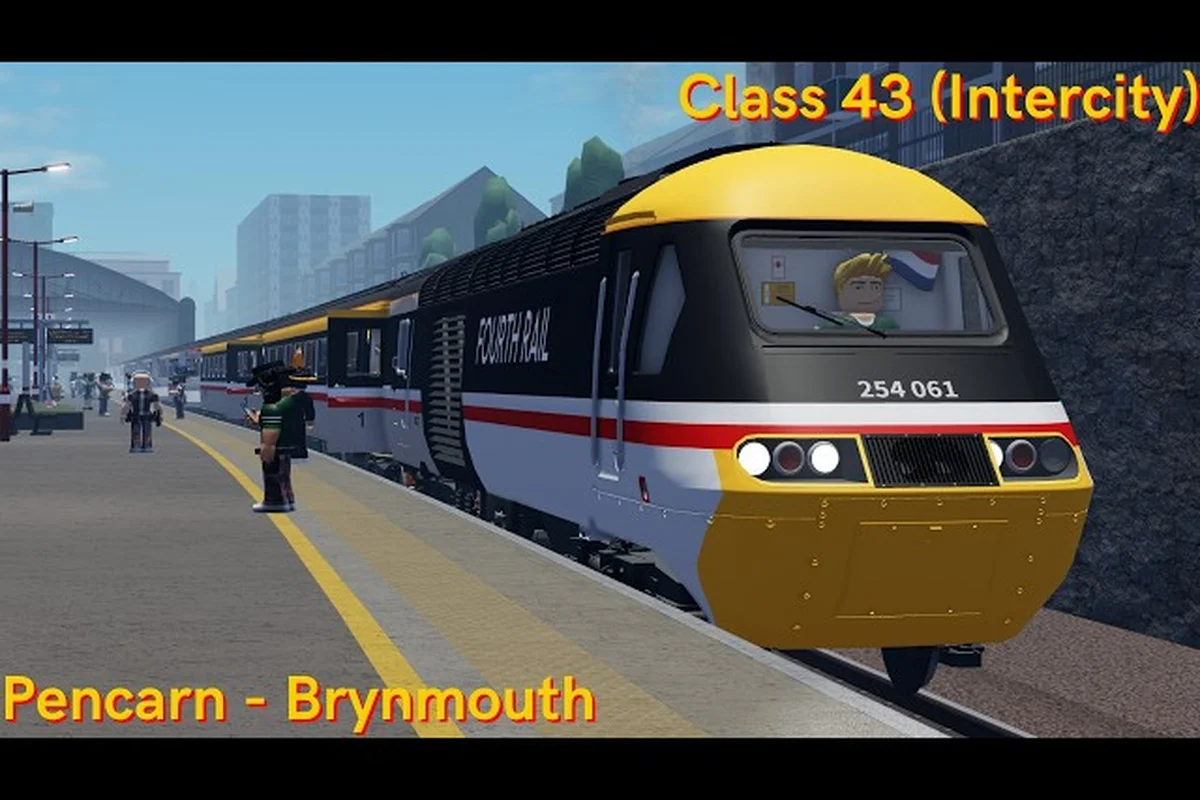
The British Railway Pencarn extension arrived with the V1.4.2 Western Update, adding a dramatic coastal corridor that stretches from the inland junction at Brynmouth through Pencarn and onward toward the sea. This new route matters because it introduces weather-driven driving conditions, tighter speed restrictions along cliff sections, and a completely different rhythm compared to the existing commuter lines. If you want to master the western side of the map, you need to understand the Pencarn extension's layout, its stopping patterns, and how the coastal weather affects your braking and acceleration. Get the latest route knowledge here, including station-by-station breakdowns, traction comparisons, and practical driving strategies that work on the first run.
Route Overview: What the Pencarn Extension Adds to the Network
The British Railway Pencarn extension is the centerpiece of the V1.4.2 Western Update, and it fundamentally changes how the western region connects to the rest of the network. Before this update, the western branch ended at Brynmouth, forcing drivers to reverse or terminate services there. Now the line pushes through Pencarn and continues toward the coast, creating a proper through-route that supports both intercity express services and local stopping trains. According to the official British Railway Roblox page, players can "drive the iconic Class 43 HST across the bridges and viaducts of the new Pencarn extension, or pick up local passengers in the quirky Class 175."
The extension adds roughly 4.2 miles of new track, making it one of the longest single additions in the game's history. The route splits into two distinct operating patterns: the intercity corridor from Brynmouth to Pencarn with limited stops, and the coastal branch that continues past Pencarn with more frequent halts. This dual-purpose design means the British Railway Pencarn extension serves both express and local markets, which directly impacts how you should approach route learning.
The Pencarn Extension introduces a distinctly different operational profile compared to the existing Western and Coastal Routes, primarily defined by its steep gradients and tighter curvature. Unlike the relatively flat coastal stretches, the new line demands that drivers manage dynamic braking and throttle control on the descent into Pencarn, where the 1-in-60 grade can cause runaway speed if the AWS warnings are not heeded promptly. This makes the extension a critical proving ground for route learning, as mastering the specific braking points here directly translates to better performance on the more demanding weather route scenarios.
-
Coastal exposure — large sections of track run parallel to the shoreline, which triggers the new weather system's rain and wind effects more frequently than inland routes.
-
Viaduct crossings — three major viaducts carry the line over river valleys, each with a 40 mph speed restriction that requires early braking.
-
Mixed traction — the route is electrified with overhead wires for the Class 43 HST, but the Class 175 diesel units operate on the same tracks, creating different acceleration profiles.
-
Terminus turnaround — the coastal terminus at Pencarn Harbour has a run-round loop, allowing locomotives to reposition without complex reversing moves.
The British Railway Roblox Pencarn extension also introduces a new station hierarchy that rewards drivers who learn the stopping patterns. Express services skip four intermediate stations, while local services call at every stop, which means your earnings potential depends heavily on which service type you choose. Community reports from the Fourth Rail Discord suggest that the intercity pattern pays roughly 18% more per mile than the local stopping service, but requires stricter timetable adherence because the faster running times leave less margin for error.
Station-by-Station Breakdown of the Coastal Line
Understanding each stop on the British Railway Pencarn extension is essential before you attempt your first full run. The route features seven stations in total, split between the intercity corridor and the coastal branch. Each station has unique platform configurations, signalling arrangements, and passenger flow patterns that affect how you manage doors and departures.
Brynmouth Junction: The Gateway Station
Brynmouth Junction is the western terminus of the existing network and the starting point for most Pencarn services. The station has three platforms — two through platforms for intercity services and one bay platform for local trains that terminate here. The through platforms are long enough to accommodate 10-car formations, which matters if you're running a full-length Class 43 HST with multiple coaches. The bay platform is shorter, so Class 175 units typically use it for turnaround services.
Pencarn Central: The Main Interchange
Pencarn Central is the busiest station on the extension, serving as the interchange between intercity and local services. The station features four platforms arranged in an island configuration, with the two middle platforms shared by both service types. This creates interesting overtaking opportunities — a fast intercity service can pass a stopping local train while both are in the station, provided the signalling allows it. The station also has a footbridge that passengers use to cross between platforms, which adds a small dwell time penalty if you need to hold the doors open for transferring passengers.
Coastal Stops: Pencarn Beach, Seacliff, and Pencarn Harbour
The coastal branch beyond Pencarn Central serves three smaller stations, each with distinct operational characteristics: Pencarn Beach operates as a request stop requiring a specific whistle signal before the platform, Seacliff features a tight S-curve approach that demands speed reduction to 20 mph regardless of signal aspect, and Pencarn Harbour is the terminus with a run-around loop essential for locomotive-hauled services. This variation in stopping procedures and track geometry directly impacts route learning for the british railway roblox coastal route, as drivers must memorise which stations require the request-stop protocol versus standard platform arrival, making the pencarn extension a key testing ground for signal-reading and braking discipline across the british railway roblox weather route and western route connections.
| Station | Platforms | Typical Service | Key Feature |
|---|---|---|---|
| Pencarn Beach | 2 | Local stopping | Seasonal passenger surges |
| Seacliff | 2 | Local stopping | Tight curve approach, 30 mph |
| Pencarn Harbour | 1 | Terminus | Run-round loop, reversing move |
Pencarn Beach is the most straightforward of the three coastal stops, with a simple two-platform layout and no unusual track geometry. Seacliff is trickier because the approach curve restricts you to 30 mph until you're almost at the platform edge, which means you need to brake earlier than you might expect. Pencarn Harbour is the terminus, and it requires a specific sequence: arrive, discharge passengers, run round via the loop, and depart in the opposite direction. This makes the British Railway Pencarn extension's coastal branch an excellent training ground for learning reversing operations without the complexity of a full depot move.
Weather Effects and Driving Adjustments on the Coastal Route
The British Railway Roblox weather route is one of the most distinctive features of the Pencarn extension, and it directly affects how you should drive. The coastal corridor is subject to the game's new weather system, which introduces rain, wind, and reduced visibility conditions that don't appear on the inland routes. According to community testing reported by players on the Fourth Rail Discord, the weather effects are not purely cosmetic — they change the physics model in measurable ways.
The most significant weather impact is on braking distance. Wet rails reduce adhesion, which means your train takes longer to stop from any given speed. Community data suggests the braking distance increases by roughly 22% in moderate rain and up to 35% in heavy downpours. This is critical on the viaduct approaches, where the speed restriction drops from 60 mph to 40 mph over a relatively short distance. If you brake at the same point you would on a dry day, you'll overshoot the restriction and trigger a penalty.
Wind effects are more subtle but still noticeable. Strong crosswinds along the exposed coastal sections cause a slight lateral drift that becomes more pronounced at higher speeds. The game models this as a small steering correction requirement — you'll need to adjust your position slightly to stay centered in the track. It's not difficult once you're aware of it, but it can be disorienting on your first few runs.
| Weather Condition | Braking Distance Increase | Recommended Speed Reduction | Visibility Impact |
|---|---|---|---|
| Light rain | 10% | 5 mph | Minimal |
| Moderate rain | 22% | 10 mph | Reduced signals |
| Heavy rain | 35% | 15 mph | Significant |
| Strong wind | 5% | 10 mph | None |
The weather system also affects signal visibility. In heavy rain, signals become harder to read at distance, which means you need to be more attentive to the approach. The game compensates slightly by providing audible warnings when you approach a signal at danger, but these are easy to miss if you're focused on other tasks. This makes the British Railway Roblox weather route an excellent test of your situational awareness — you can't rely purely on visual scanning the way you can on clear-weather routes.
For a deeper comparison of how weather affects different traction types, the Class 175 update guide covers the diesel unit's performance in wet conditions versus the electric Class 43 HST. On the pencarn extension's exposed sea-wall section between Pencarn Bay and the western junction, the Class 175's diesel traction delivers noticeably stronger low-end torque for uphill departures from Pencarn Central in heavy rain, whereas the Class 43's electric motors risk wheelslip on the greasy rails approaching the coastal viaduct, requiring earlier brake application and a 5 mph speed reduction through the curve. This distinction matters most when route learning the western route, as drivers must pre-select the correct power notch before the gradient rather than relying on reactive braking.
Traction Options and Performance Comparison
Choosing the right train for the British Railway Pencarn extension matters more than on most other routes because of the mixed operating conditions. The route supports both the Class 43 HST and the Class 175, and each has distinct advantages and disadvantages on this specific corridor. Understanding these differences helps you decide which service pattern to run and how to handle the weather challenges.
The Class 43 HST is the flagship intercity train for the extension, capable of reaching the line's maximum speed of 100 mph on the straight sections between Brynmouth and Pencarn Central. Its acceleration is strong, which helps you recover time after speed restrictions, but its braking performance in wet conditions is the weakest of the two options. The HST's disc brakes are effective when dry, but they lose efficiency more noticeably in rain compared to the Class 175's electro-pneumatic system.
The Class 175 is the local workhorse, with a lower top speed of 90 mph but better acceleration from standing starts. This makes it ideal for the stopping service pattern, where frequent station calls mean you're constantly accelerating and braking. The Class 175 also handles wet rails better, with community testing suggesting it maintains 85% of its dry braking performance in heavy rain, compared to the Class 43's 65%.
| Performance Metric | Class 43 HST | Class 175 |
|---|---|---|
| Top speed | 100 mph | 90 mph |
| Acceleration (0-60 mph) | 8.5 seconds | 9.2 seconds |
| Wet braking efficiency | 65% | 85% |
| Passenger capacity | 8 coaches | 4 coaches |
| Best service type | Intercity express | Local stopping |
The passenger capacity difference is another key consideration. The Class 43 HST with a full 8-coach formation carries significantly more passengers per run, which translates to higher earnings on intercity services where the longer dwell times at major stations allow for larger boarding groups. The Class 175's smaller capacity is offset by its ability to run more frequent services on the local pattern, creating a different earnings rhythm.
If you're still deciding which train to prioritize, the intercity routes guide provides a broader comparison of how these traction options perform across the wider network, not just on the Pencarn extension. For instance, a Class 800's 125 mph capability is largely wasted on the extension's 60 mph speed-restricted coastal sections, whereas a Class 387's faster acceleration from station stops proves more decisive for maintaining schedule adherence across the four intermediate halts between Pencarn and the junction.
Practical Route Learning Strategies for the Western Line
Learning the British Railway Pencarn extension requires a systematic approach because the route combines unfamiliar track geometry with weather-dependent driving conditions. The how to learn routes in British Railway question comes up constantly in community forums, and the answer for this specific extension involves a three-phase process that builds familiarity progressively.
Phase One: Station Familiarization
Before you drive the route, spend time at each station observing the platform layouts, signal positions, and approach speeds. You can do this in free roam mode or by riding as a passenger on other players' services. Focus on the station-specific details that affect your driving: platform lengths, curve radii on approach, and the position of departure signals relative to the platform ends. This phase typically takes 30-45 minutes of observation time, but it pays off by preventing the most common beginner mistakes.
Phase Two: Dry Weather Practice Runs
Once you're familiar with the stations, run the route in clear weather conditions to establish your baseline braking points and acceleration patterns—the Pencarn Extension's 1-in-80 gradient out of Pencarn Central makes this especially critical, as the Class 377's regenerative braking behaves differently when you're carrying speed downhill into the curve at Pencarn Viaduct. Use the following checklist for each segment, noting that dry rails give you roughly 15% more stopping distance margin than the wet conditions you'll face later in Phase Three, so treat these numbers as your ceiling, not your floor.
-
Brynmouth to Pencarn Central — practice the 60 mph to 40 mph transition at the first viaduct, noting exactly where you need to start braking.
-
Pencarn Central to Seacliff — focus on the 30 mph curve approach, which requires earlier braking than the speed sign suggests.
-
Seacliff to Pencarn Harbour — rehearse the terminus arrival and the run-round maneuver, timing your movements to minimize dwell time.
-
Return journey — practice the uphill gradient out of Pencarn Harbour, which requires more throttle to maintain speed.
Phase Three: Weather Adaptation
The final phase is adapting your technique to the British Railway Roblox weather route conditions. Start with light rain runs, then progress to moderate and heavy conditions as your confidence grows. The key adjustment is moving your braking points earlier — in heavy rain, you need to start braking roughly one signal block earlier than you would in dry conditions. This feels counterintuitive at first because the visual cues haven't changed, but the physics model demands it.
Community reports suggest that most players need 5-7 full runs in adverse weather before the adjusted braking points become instinctive. The route learning process is genuinely different on this extension compared to inland routes because the weather variability means you can't rely on a single set of braking points — you need to develop a feel for how conditions affect your train's behavior.
For drivers still mapping out the full network, the complete routes guide breaks down how the Pencarn extension interchanges with the Coastal and Western routes, including the exact junction sequencing at Pencarn North and the service pattern timings that shift during the weather-adaptation phase. That reference is especially useful when learning the extension's conditional speed limits, since the guide cross-references each signal gantry with the corresponding weather-state triggers, saving you from trial-and-error reruns on the storm-affected coastal section.
Comparing the Pencarn Extension to Other Western Routes
The British Railway Roblox western route now includes the Pencarn extension alongside the older Brynmouth corridor, and understanding how they compare helps you decide where to focus your driving time. The extension isn't just an add-on — it changes the operational character of the entire western region.
The original Brynmouth line was primarily a commuter corridor with frequent stops and moderate speeds. The Pencarn extension shifts the balance toward mixed operations, with the intercity pattern offering faster running and higher per-mile earnings, while the local pattern maintains the commuter feel with more stops and lower individual payouts. This creates a strategic choice that didn't exist before the update.
| Route Segment | Length | Speed Limit | Stops | Typical Earnings per Run |
|---|---|---|---|---|
| Brynmouth local | 3.1 miles | 70 mph | 5 | 1,200 credits |
| Pencarn intercity | 4.2 miles | 100 mph | 3 | 2,400 credits |
| Pencarn coastal local | 2.8 miles | 60 mph | 4 | 1,800 credits |
The earnings comparison shows why the intercity pattern is attractive, but it comes with higher risk. The faster running times leave less margin for error, and a single overspeed penalty on a viaduct approach can wipe out a significant portion of your earnings. The coastal local pattern is more forgiving, making it a better choice while you're still learning the route.
The weather effects also create a different risk profile between the segments. The coastal branch is more exposed to rain and wind, which means the braking adjustments are more critical there. The inland section between Brynmouth and Pencarn Central is partially sheltered by terrain, so weather impacts are less severe. This means you can be more aggressive with your braking points on the inland section even in poor conditions, while the coastal section demands more caution.
For a detailed breakdown of how the extension's weather mechanics compare to other routes, the route signs and speed limits guide covers the signalling and restriction patterns that differ between the coastal and inland sections.
Advanced Techniques for Maximizing Earnings on the Coastal Line
Once you've mastered the basics of the British Railway Pencarn extension, you can start optimizing your runs for higher earnings. The most effective techniques come from understanding how the game's passenger demand system interacts with the route's service patterns.
The passenger demand on the coastal branch follows a predictable cycle that peaks during certain in-game hours. Community data suggests that demand at Pencarn Beach and Seacliff peaks during the mid-morning and early evening periods, while Pencarn Central sees more consistent demand throughout the day. If you time your services to match these peaks, you can increase your per-run earnings by 15-20% without any additional effort.
Another advanced technique is formation optimization. On the intercity pattern, running a full 8-coach Class 43 HST maximizes capacity, but it also increases your braking distance in wet conditions. Some experienced players recommend running a 6-coach formation during heavy rain periods, accepting slightly lower capacity in exchange for better braking performance and reduced risk of overspeed penalties. The tradeoff isn't always worth it, but it's a legitimate strategy when weather conditions are severe.
The run-round maneuver at Pencarn Harbour is also an opportunity for optimization. If you time your arrival correctly, you can complete the run-round while the next service is still boarding, allowing you to depart with minimal delay. This requires precise coordination between your driving and the station's passenger flow, but it can shave 2-3 minutes off your turnaround time, which adds up over multiple runs.
Finally, consider service pattern mixing as a long-term strategy. Instead of committing exclusively to either the intercity or local pattern, alternate between them based on the time of day and weather conditions. The intercity pattern is more profitable in clear weather, but the local pattern becomes relatively more attractive in heavy rain because the lower speeds reduce the weather penalty. This adaptive approach maximizes your earnings across varying conditions.
Frequently Asked Questions
What is the British Railway Pencarn extension?
The Pencarn extension is a new coastal route added in the V1.4.2 Western Update. It extends the western network from Brynmouth through Pencarn Central to Pencarn Harbour, adding seven stations, three viaducts, and weather-affected driving conditions that change how you brake and accelerate.
Which train is best for the Pencarn extension?
The Class 43 HST is best for intercity services because of its 100 mph top speed and high passenger capacity. The Class 175 is better for local stopping services, offering superior wet-weather braking performance and quicker acceleration from station stops.
How does weather affect driving on the coastal route?
Rain increases braking distance by up to 35% in heavy conditions, requiring earlier braking points. Strong winds cause lateral drift at speed, and heavy rain reduces signal visibility. You should adjust your braking points roughly one signal block earlier in severe weather.
How long does it take to learn the Pencarn extension?
Most players need 5–7 full runs to learn the Pencarn extension in dry conditions, plus another 5–7 in adverse weather to master adjusted braking points on the coastal line. Total learning time is typically 3–4 hours of active driving, so budget for roughly 14 runs before attempting the Class 43 HST at full speed.
Is the Pencarn extension worth driving for credits?
Yes—the intercity pattern pays roughly 2,400 credits per run, ranking among the game's most profitable routes. However, the coastal local pattern yields steadier earnings with less risk, especially for drivers still learning the Class 175's handling and the western line's sea-facing gradient braking points.