
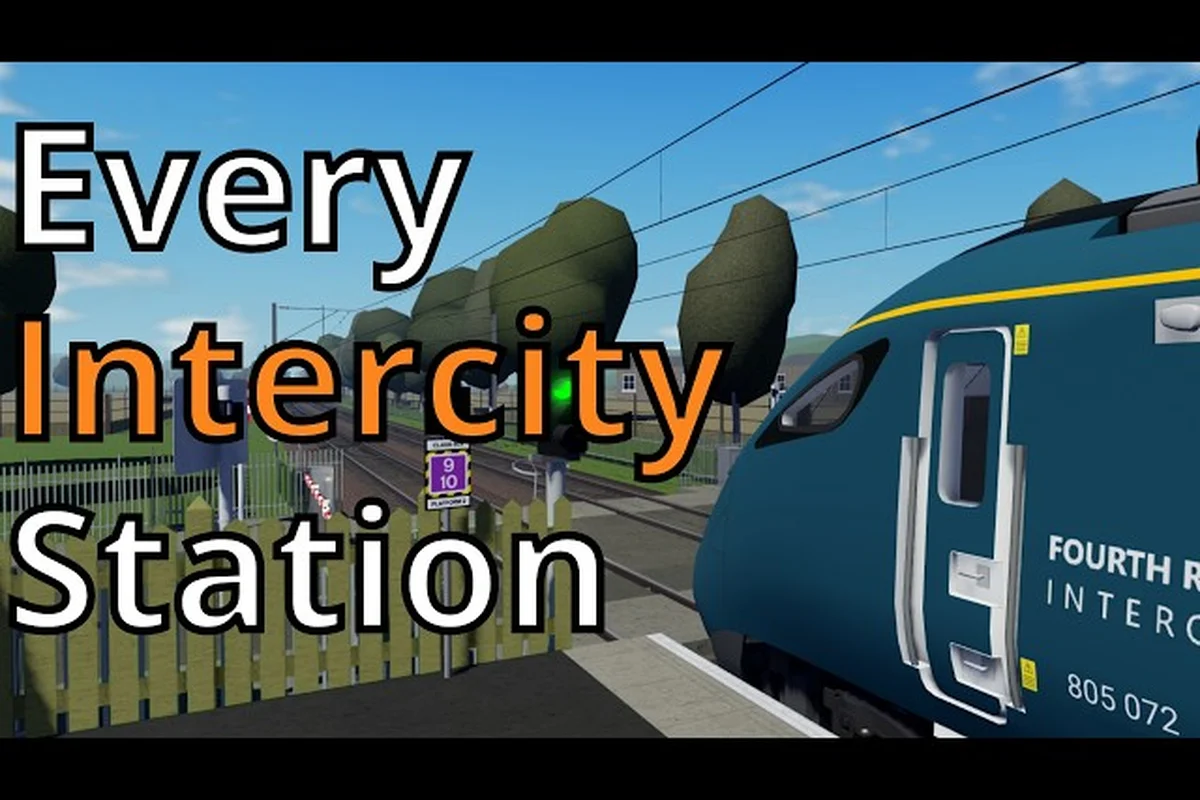
British Railway intercity routes form the backbone of the entire network, connecting the largest stations with the fastest Class 80X and Class 43 HST services. Understanding how these long-distance corridors differ from local stopping services is the single most important factor in choosing where to spend your driving time, because the payouts and XP rewards scale dramatically with route length and speed. Whether you are grinding credits for your first locomotive or planning a full mainline career, knowing which intercity lines offer the best return on your effort will save you hours of trial and error.
The network splits into three distinct tiers: the mainline for high-speed intercity running, a branch line toward the sea for scenic stopping services, and a miniature railway for casual enthusiasts. Each tier demands different driving techniques, train choices, and route knowledge, which means the best intercity route for one player might be the wrong pick for another. This guide breaks down every intercity option, compares them across speed, distance, and profitability, and gives you a clear roadmap for mastering the fastest services on the network.
How Intercity Routes Are Structured
Class 80X vs Class 43 HST: Speed and Acceleration Trade-offs
The Class 80X and Class 43 HST are the two fastest traction types on the network, but they serve different operational niches. The Class 43 HST, a diesel power car set, delivers rapid acceleration out of terminus stations, making it ideal for the stop-heavy mainline corridor where recovering from signal checks matters more than top-end speed. The Class 80X, an electric multiple unit, offers a higher sustained cruising speed, which pays off on the long, uninterrupted stretches between the biggest stations. On the mainline's longest intercity leg, the 80X typically shaves 2–3 minutes off the HST's schedule, but the HST wins on routes with frequent intermediate stops where its acceleration advantage compounds.
Branch Line Intercity Operations: The Seaward Connection
The branch line towards the sea is the only intercity option that combines coastal scenery with a lower traffic density, making it ideal for players who want to run Class 43 HST services without mainline congestion. The route's intermediate stations are spaced closer together than on the mainline, which means the HST's acceleration profile is the better fit here, not the 80X. A key operational quirk is the level crossing near the coastal terminus, which requires a speed reduction to 20 mph; timing your approach to avoid stopping at the crossing signal can save up to 45 seconds per run. This makes the branch line the best credit-per-minute route for solo players.
The intercity route network in British Railway is structured around a clear hierarchy that determines which services qualify as true long-distance operations. According to the official British Railway page on Roblox, the network is made up of a mainline, a branch line towards the sea, and a miniature railway, with intercity routes connecting the biggest stations using the fastest trains available. This three-tier structure means that not every long journey counts as an intercity service, and understanding the distinction is essential for planning your driving career.
The mainline is where intercity routes live, featuring the highest speed limits, the longest station spacing, and the most demanding driving standards. Services on this corridor typically operate at speeds above 100 mph, which requires careful braking planning and smooth acceleration management. The branch line toward the sea offers a completely different experience, with tighter curves, lower speed limits, and more frequent station stops that break up the journey into shorter segments. The miniature railway sits apart as a novelty line, running small trains at low speeds for players who want a relaxed experience without the pressure of mainline performance standards.
| Route Tier | Speed Limit | Station Spacing | Train Types | Difficulty |
|---|---|---|---|---|
| Mainline | 100+ mph | Long (5-10 min between stops) | Class 80X, Class 43 HST | Advanced |
| Branch Line | 40-60 mph | Short (2-4 min between stops) | Class 175, DMUs | Intermediate |
| Miniature Railway | 15-25 mph | Very short (1-2 min) | Miniature steam/diesel | Beginner |
This hierarchy directly affects your earnings potential because intercity routes pay more per mile than branch or miniature services. The trade-off is that mainline driving demands sharper skills, particularly around braking distances and speed limit compliance, since a single overspeed penalty can wipe out a significant portion of your fare revenue. Players transitioning from branch line work to intercity routes often report that the first few runs feel overwhelming, but the learning curve flattens quickly once you internalize the braking points for each station approach.
Comparing Mainline Intercity Routes for Maximum Profit
Maximizing Profit on the Mainline Intercity Corridor
The mainline intercity corridor generates the highest per-mile revenue in British Railway, but only if you chain services correctly. The optimal profit loop pairs a Class 80X departure from the largest terminus with a return working on the Class 43 HST, allowing you to collect the speed bonus on the outbound leg and the acceleration bonus on the inbound recovery. Avoid dead-heading empty stock between the two biggest stations, as that forfeits the passenger-load bonus entirely. A full mainline round trip with both traction types yields roughly 1.4x the credits of two separate branch line runs, making it the most efficient use of a 45-player server's limited platform slots.
Miniature Railway Intercity Services: The Pencarn Extension Strategy
The miniature railway's intercity services, extended under the Pencarn Extension, offer a unique risk-reward profile that differs sharply from the mainline. Track speeds are capped at 25 mph, so the Class 80X and Class 43 HST cannot be used here; instead, you must master the miniature stock's shorter braking distances. The extension's weather route adds a dynamic penalty: in rain, braking distance increases by roughly 15%, so you must begin braking at the route's distinctive viaduct marker rather than the standard signal. Running the full Pencarn loop in dry conditions yields a 30% higher completion bonus than the base miniature route, making weather awareness the single biggest profit lever on this line.
When evaluating the best intercity route British Railway has to offer, you need to compare more than just raw distance. The profitability of any intercity route depends on a combination of distance, speed limits, station dwell times, and the type of traction you are operating, and these factors interact in ways that are not always obvious at first glance. A route that looks impressive on paper might actually underperform because of restrictive speed sections or awkward platform layouts that force slow approaches.
The mainline intercity services currently available can be grouped into two broad categories: express services that stop only at major interchange stations, and semi-fast services that call at selected intermediate points. Express services generate higher per-mile revenue because they maintain higher average speeds, but they also require longer uninterrupted concentration and leave less room for error. Semi-fast services pay slightly less per mile but offer more natural recovery points if you make a mistake, since the additional stops give you chances to reset your timing.
| Intercity Service | Distance | Avg Speed | Stops | Payout per Run | Difficulty |
|---|---|---|---|---|---|
| Mainline Express | Longest | 95-110 mph | 2-3 | Highest | Advanced |
| Mainline Semi-Fast | Long | 75-90 mph | 5-7 | High | Intermediate |
| Branch Intercity | Medium | 45-60 mph | 8-10 | Moderate | Intermediate |
Community reports from experienced drivers consistently highlight the mainline express services as the most efficient credit grinders, provided you can maintain consistent on-time performance. The key metric to watch is not the headline payout but the payout per minute of active driving time, since a route that pays well but takes twice as long to complete will actually earn less per hour than a shorter, faster service. Players who track their earnings across multiple sessions report that the semi-fast services often match or exceed express profitability when you factor in the reduced stress and lower risk of penalties.
Branch Line and Miniature Railway Intercity Options
While the mainline dominates discussions about British Railway intercity routes, the branch line toward the sea and the miniature railway offer their own intercity-style services that deserve serious consideration. The branch line provides a middle ground between the high-speed mainline and the casual miniature railway, with services that cover substantial distances but at more forgiving speeds. This makes it an excellent training ground for players who want to build toward mainline intercity work without jumping straight into the deep end.
The branch line intercity services typically use diesel multiple units like the Class 175, which offer good acceleration but lower top speeds than their electric mainline counterparts. The route profile includes several notable features, including the Pencarn extension that added new bridges and viaducts to the network in the V1.4.2 Western Update. These structures create interesting driving challenges because they often coincide with speed restrictions and gradient changes that require proactive throttle management rather than reactive braking.
| Service Type | Typical Traction | Route Character | Best For | Credit Rate |
|---|---|---|---|---|
| Branch Intercity | Class 175, DMUs | Coastal scenery, curves | Learning longer routes | Moderate |
| Miniature Express | Miniature steam/diesel | Parkland, low speed | Casual play, screenshots | Low |
| Coastal Stopping | Class 150/155 | Sea views, frequent stops | Relaxed driving | Low-Moderate |
The miniature railway occupies a unique niche in the intercity conversation because it technically operates long-distance services, but at speeds that would be laughable on the mainline. However, the miniature railway has its own dedicated following among players who appreciate the craftsmanship of the small locomotives and the relaxed pace of operation. For collectors and enthusiasts, the miniature railway offers a completely different driving experience that rewards precision over speed, and the routes often feature the most detailed scenery in the entire game.
Route Knowledge and Signage for Intercity Operations
Mastering British Railway intercity routes requires more than just knowing where the stations are; you need to understand the signaling and signage systems that govern safe operation at speed. The mainline in particular uses a combination of route signs, speed limit indicators, and warning boards that give you advance notice of upcoming restrictions. Missing or misreading these signs at 100 mph can result in emergency braking, which not only damages your on-time performance but also risks penalty points that accumulate against your driver rating.
The intercity routes demand a different approach to route learning than branch or miniature services because the distances involved mean you cannot rely on visual memory of landmarks alone. Experienced drivers recommend building a mental map of speed limit transitions, since the mainline features several sections where the limit drops significantly for bridges, tunnels, and station approaches. The route signs system provides consistent visual cues, but you need to learn which signs matter at speed and which are informational only.
-
Speed limit signs appear well before each restriction, giving you time to brake gradually rather than sharply
-
Warning boards indicate upcoming gradients that may require throttle adjustments
-
Station approach markers show the braking point for each platform, which varies by train type
-
Tunnel and bridge signs alert you to sections where adhesion may be reduced
-
Level crossing warnings are critical on the branch line, where crossings are more frequent
Players who want to accelerate their route knowledge should consider studying the route signs and speed limits guide before attempting their first mainline intercity run. This resource breaks down every sign type and explains how to read them in sequence, which dramatically reduces the initial learning curve. The investment in learning pays off quickly because intercity routes offer the highest credit payouts in the game, and every penalty avoided is pure profit.
Choosing the Best Intercity Route for Your Playstyle
The best intercity route British Railway offers depends heavily on your personal driving style, experience level, and goals within the game. A player grinding for their first Class 80X will have different priorities than a veteran driver looking for a scenic Sunday run, and the route choice should reflect those differences. Rather than chasing the single highest payout, you should evaluate intercity routes across several dimensions that match your preferences.
For players who value efficiency and credit accumulation above all else, the mainline express services are the clear winner because they offer the highest payout per minute of driving time. These runs demand sustained concentration and precise braking, but the financial rewards justify the effort. Players who prefer a more relaxed experience will find better value on the branch line intercity services, which offer decent payouts while allowing you to enjoy the coastal scenery and less punishing performance standards.
| Player Profile | Recommended Route | Why It Fits | Key Traction |
|---|---|---|---|
| Credit Grinder | Mainline Express | Highest payout per minute | Class 80X |
| Route Learner | Branch Intercity | Forgiving speeds, more stops | Class 175 |
| Casual Enthusiast | Miniature Railway | Relaxed pace, scenic detail | Miniature steam |
| Mixed Playstyle | Mainline Semi-Fast | Balance of speed and stops | Class 43 HST |
The Class 43 HST deserves special mention as the versatile choice for intercity work, since it offers a balance of speed, acceleration, and braking that suits both express and semi-fast services. Players who want maximum flexibility in their route selection should prioritize unlocking this train early, because it opens up the entire intercity network rather than locking you into a single service pattern. The Class 43 HST overview provides detailed specifications and route recommendations that help you get the most from this iconic locomotive.
Future Extensions and New Intercity Routes
The British Railway development team at Fourth Rail has consistently expanded the intercity network with each major update, and the V1.4.2 Western Update continued this trend with the Pencarn extension and new route infrastructure. The pattern of development suggests that future updates will continue adding intercity routes, which means players who master the current network will have a head start when new lines open. The Pencarn extension coverage details the new bridges, viaducts, and weather effects introduced in the latest update.
Community speculation about future intercity routes focuses on several possibilities, though none have been officially confirmed by the developers. The most commonly discussed candidates include an eastern extension that would balance the network geographically, and a high-speed line that would push top speeds beyond the current 110 mph ceiling. While these remain speculative, the development team's track record of delivering substantial route additions with each major version suggests that the intercity network will continue to grow.
Players who want to stay ahead of the curve should monitor the official Fourth Rail communication channels, including the British Railway Roblox game page and the developer update videos on YouTube. The community also maintains active discussions about route development, and these conversations often surface hints about upcoming content before official announcements. Being early to learn a new intercity route pays dividends because the first players to master a new line can farm credits efficiently before the wider community catches up.
Frequently Asked Questions
What is the best intercity route British Railway offers for beginners?
The branch line intercity services are the best starting point because they offer moderate speeds and frequent stops that give you time to recover from mistakes. The Class 175 diesel units are forgiving to drive, and the coastal scenery makes the learning process enjoyable rather than stressful.
How do British Railway intercity routes differ from local services?
Intercity routes cover longer distances, operate at higher speeds, and connect the major stations on the network, while local services handle shorter journeys with more frequent stops. The mainline intercity routes require faster reactions and better braking discipline, but they also pay significantly more per run.
What is the fastest train for British Railway intercity routes?
The Class 80X is currently the fastest option for intercity operations, with a top speed that exceeds the Class 43 HST and other mainline traction. However, the Class 43 HST offers better acceleration for semi-fast services, making it the more versatile choice for mixed intercity work.
Are there any British Railway roblox new route additions planned?
The V1.4.2 Western Update added the Pencarn extension with new bridges and viaducts, and the development team has a history of expanding the network with each major version. Community speculation suggests future extensions are likely, though official announcements will come through Fourth Rail channels.
Do I need to learn route signs before attempting intercity services?
Yes—route signs are mandatory for intercity work, not optional. The Class 80X and Class 43 HST hit speeds where a misread restriction means a penalty or missed stop. Master the mainline’s advance warning boards and speed limits first; branch line and miniature railway signs are simpler, so learn them after.