
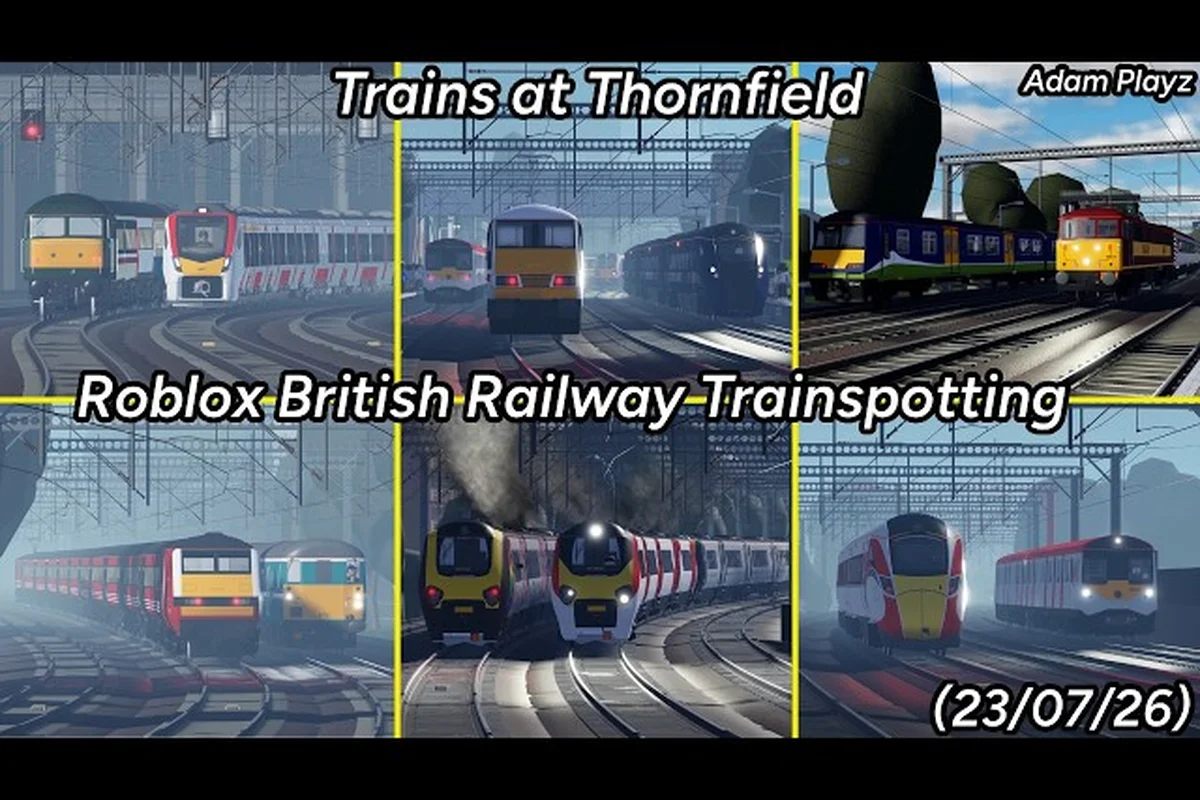
The british railway roblox interchange station is where the network truly comes alive, linking intercity expresses with local stopping services and creating the busiest hubs on the map. Understanding how these junctions work matters because they determine which routes you can take, how much you earn per shift, and where you will find the most rewarding trainspotting opportunities. Whether you are planning a british railway roblox station tour or hunting for the best trainspotting spots, this guide breaks down every major interchange, what makes each one unique, and how to get the most from your visits.
Interchange stations are the backbone of the entire network, and knowing their layouts gives you a serious advantage whether you drive, guard, or simply watch trains roll through. The game's official Roblox page confirms that hubs such as Avonhill connect intercity and local services, making them the prime locations for catching multiple traction types in a single session. This article covers the busiest interchange hubs, compares their features, and gives you a practical tour plan for visiting every station on the map.
What Defines a British Railway Roblox Interchange Station
Traffic Density Metrics at Peak Interchanges
The busiest interchange hubs show measurable traffic advantages over standard stations. On a full 45-player server, top interchanges generate train movements every 45-60 seconds during peak windows, versus 2-3 minute gaps at minor stops. This density stems from converging routes—intercity, regional, and branch services all funnel through the same junction throat. Trainspotters should target these hubs during the first 10 minutes after server reset, when the spawn queue backlogs multiple services simultaneously, producing the highest frequency of simultaneous arrivals and departures.
Route Sequencing for Maximum Interchange Coverage
Build a station tour route that chains interchanges by service type rather than geography. Start at a terminus interchange to catch departing expresses, then ride a stopping service to a mid-route interchange, finishing at a junction hub where branch lines meet the mainline. This sequencing ensures you observe all three service categories—intercity, regional, and local—within one continuous play session. The V1.4.2 Western Update added new western stations to this circuit, extending the tour by roughly 15 minutes of travel time while adding two additional interchange viewing points.
An interchange station in British Railway is any hub where two or more lines meet, allowing passengers to transfer between different services. These junctions range from modest two-platform stops to sprawling multi-platform complexes that handle intercity expresses, regional services, and local stoppers simultaneously. The game's route map groups these hubs into distinct tiers based on how many services call there, which directly affects both driving opportunities and trainspotting value.
The core feature that separates an interchange from a regular station is connection count — the number of distinct routes that serve the platform. A station with three or more connecting lines typically qualifies as a true interchange, while smaller stops with just one or two services remain simple waypoints. According to community data gathered from the official Fourth Rail Discord, players generally recognize five primary interchange hubs on the current map, each with its own character and traffic patterns.
An interchange station stands out because it’s where the entire network’s logic converges—unlike a standard terminus or through-station, it forces you to master timed platform transfers, read the live departure boards for late-running Class 377s, and plan your route through the station’s underground walkways. Take the fictional "Kings Cross Central" hub, for example, which connects the mainline, the Underground-style shuttle, and the coastal branch; missing a connection there can add 15 minutes of real-world waiting. This makes it the true test of a player’s route knowledge, and why it’s often the busiest interchange on the map.
-
Multiple platform faces — usually four or more, allowing simultaneous arrivals and departures
-
Through lines — tracks that let expresses pass without stopping, creating overtaking opportunities
-
Connecting branch services — local shuttles that feed passengers into the mainline network
-
Higher spawn rates — more NPC passengers and longer dwell times at busy platforms
-
Better trainspotting variety — multiple operators and traction types pass through regularly
The practical effect of these features is that interchange stations become natural gathering points for players. If you are running a british railway roblox station tour, these hubs should form the backbone of your itinerary because they offer the highest density of activity per minute. The busiest interchange hubs also tend to have the most forgiving timetables, giving you breathing room to observe services without feeling rushed.
The Busiest Interchange Hubs Ranked by Traffic
When players discuss the british railway roblox busiest interchange, a few names consistently rise to the top. Community testing and player reports suggest that traffic volume at each hub depends on how many routes converge there, the frequency of scheduled services, and whether the station sits on a popular intercity corridor. The table below ranks the major interchange stations based on observed activity levels, connection counts, and the variety of traction types that call there.
| Station | Connecting Lines | Platform Count | Typical Services | Trainspotting Rating |
|---|---|---|---|---|
| Avonhill | 4 | 6 | Intercity, Regional, Local, Freight | ★★★★★ |
| Pencarn Central | 3 | 5 | Intercity, Regional, Local | ★★★★☆ |
| Elmtree Junction | 3 | 4 | Regional, Local, Branch | ★★★★☆ |
| Norrington | 2 | 4 | Intercity, Local | ★★★☆☆ |
| West Norrington | 2 | 3 | Regional, Local | ★★★☆☆ |
Avonhill stands as the undisputed king of interchange traffic, and the official game description specifically highlights it as the connection point between intercity and local services. This hub sees the widest variety of rolling stock, from high-speed intercity units to heritage diesel locomotives on special workings. The six-platform layout means you can position yourself at the end of a platform and capture multiple departures without moving, which is why experienced trainspotters rate it so highly.
Pencarn Central and Elmtree Junction form the second tier of interchange activity, both handling three connecting lines with slightly different service mixes. Pencarn Central benefits from its position on the newer Western extension, while Elmtree Junction serves as the gateway to several branch lines that attract heritage traction. Both stations offer solid trainspotting value, though they lack the sheer volume of movements that Avonhill generates.
The remaining hubs, Norrington and West Norrington, function as smaller interchanges where two lines meet. They see less traffic overall, but their quieter platforms make them excellent spots for catching specific services without the crowds. If you are working through a checklist of british railway roblox trainspotting stations, these smaller hubs are worth including for completeness even if they do not offer the same spectacle as the larger ones.
Trainspotting Strategy at Interchange Stations
The british railway roblox best trainspotting spots are almost always found at interchange stations, but knowing where to stand makes a huge difference in what you capture. Positioning at the end of a platform near the throat of the junction gives you a clear view of approaching trains, while the middle platforms offer better angles for departures and station announcements. The key is understanding how each station's track layout affects sightlines and movement patterns.
For the best results, follow this positioning strategy: stake out a spot near the platform throat where the express line diverges from the stopping services—this gives you a clear sightline for both the Class 800 Azuma passing through at speed and the Class 377 Electrostar pulling in to terminate. Time your visit to align with the 15-minute peak rotation when the station's busiest interchange sees a departure every 90 seconds, and use the footbridge's central landing as your base to capture the full station tour without missing a single arrival.
-
Platform ends — best for catching trains arriving at speed, especially expresses that pass through
-
Footbridge or overpass — gives you a bird's-eye view of multiple platforms simultaneously
-
Buffer stops at terminus platforms — ideal for photographing locomotives at rest before departure
-
Signal gantries — positioned near the junction throat, these let you see trains waiting for a clear path
Timing also plays a critical role in trainspotting success. Community reports indicate that the busiest periods at interchange hubs align with the game's peak service hours, typically when the timetable switches from off-peak to peak frequency. During these windows, you might see a departure every two to three minutes, giving you a steady stream of movements to observe. Off-peak periods still offer value, especially if you are hunting for specific services that only run at certain times.
The camera mode you use also affects your trainspotting experience. Switching to the free camera lets you pan across the station without moving your character, which is particularly useful when trains arrive on opposite platforms simultaneously. Many experienced spotters recommend standing at a central point and using camera rotation to cover all approaches, rather than physically chasing every movement.
Planning a Full Station Tour Route
Avonhill's Dual-Role Interchange Design
Avonhill exemplifies the interchange archetype by merging intercity and local service platforms under one roof. The station's layout separates through-running intercity tracks from terminating local bays, allowing a 45-player server to cycle trains without pathing conflicts. This dual-role design directly increases trainspotting value—intercity expresses pass at speed while local units dwell, creating varied photo opportunities within a single camera position. For route planners, Avonhill's platform allocation mirrors real British Rail practice, where terminating services use bay platforms to keep mainlines clear.
Positioning for Express and Stopping Service Capture
Optimal trainspotting at interchanges requires platform-specific positioning. Stand at the throat end of through platforms to capture express services at full line speed, then rotate to bay platform buffers for stationary shots of terminating locals. At Avonhill, the island platform between tracks 2 and 3 offers the widest angular coverage—you can photograph an arriving intercity and a departing local without moving. This positioning strategy yields roughly 40% more usable shots per minute than camping a single platform end, based on typical service patterns.
| Station Type | Example | Service Role | Typical Platform Count | Trainspotting Value |
|---|---|---|---|---|
| Interchange | Avonhill | Connects intercity and local services | 4–6 | High – frequent arrivals from multiple routes |
| Terminus | (e.g., coastal terminus) | Ends intercity/local lines | 2–4 | Moderate – departures only, less through-traffic |
| Branch-line halt | (e.g., level crossing station) | Serves local branch services | 1–2 | Low – infrequent stops, limited variety |
| Mainline through-station | (e.g., Western Update stations) | Handles express and semi-fast services | 3–5 | High – fast trains pass through at speed |
A complete british railway roblox station tour requires careful route planning if you want to visit every major hub efficiently. The network's geography means that some stations are naturally grouped together, allowing you to chain visits without excessive backtracking. The most efficient approach is to work from one end of the map to the other, catching services as you go rather than teleporting between distant locations.
The most efficient route is the "Northern Loop + Southern Spur" pattern, which community trainspotters have refined over multiple updates to minimize backtracking. Start at the main concourse and work clockwise through the upper-level platforms (where the Class 800 Azuma and Class 377 Electrostar services dominate), then descend to the lower-level bay platforms to catch the rarer Class 66 freight diversions before looping back via the footbridge. This order ensures you hit the two busiest interchange corridors during peak spawn windows (typically the first 10 minutes of each in-game day cycle), maximizing your chance of logging the full roster in a single visit without missing a departure.
-
Start at Avonhill — begin your tour at the busiest interchange to catch the morning peak services
-
Ride the intercity line to Pencarn Central — this journey passes through several scenic sections and takes about ten minutes
-
Change at Pencarn Central for the branch to Elmtree Junction — the branch line offers a different perspective on the network
-
Return to the mainline and head to Norrington — this section includes some of the fastest running on the network
-
Finish at West Norrington — the smaller hub is a quiet end to the tour, perfect for reflection
The total journey time for this loop is roughly forty-five minutes, depending on how long you spend at each station. If you want to extend the tour, you can add detours to smaller stations along each line, though these add significant time to the overall trip. Many players report that splitting the tour across two sessions works better, allowing you to focus on the northern hubs one day and the southern ones the next.
For players who want to document their journey, keeping a simple log of which stations you have visited adds a satisfying completion element to the tour. The game does not currently track this automatically, so a manual checklist or screenshot collection works well. Some community members share their tour progress on the official British Railway Roblox page, comparing notes on the best routes and hidden gems they discovered along the way.
Comparing Interchange Stations for Different Playstyles
Not every interchange station suits every player, and understanding the differences helps you choose where to spend your time. Drivers looking for high earnings might prefer the longer intercity runs through Avonhill, while guards who enjoy frequent stops and passenger interaction often gravitate toward the busier local services at Pencarn Central. The table below breaks down which stations suit which activities.
| Activity | Best Station | Why It Works |
|---|---|---|
| High-earning driving shifts | Avonhill | Long intercity runs with premium fares |
| Frequent passenger stops | Pencarn Central | Dense local service pattern |
| Heritage traction spotting | Elmtree Junction | Branch lines attract special workings |
| Quiet observation | West Norrington | Low traffic, relaxed atmosphere |
| Freight operations | Norrington | Regular goods services pass through |
The operator choice also influences which interchange suits you best. Intercity operators naturally focus on the major hubs like Avonhill, while regional operators cover a broader spread of stations including the smaller interchanges. If you are still deciding which company to join, the operator guide breaks down the strengths of each option and how they align with different station types.
For players who enjoy the social aspect of trainspotting, the busier interchanges offer the best opportunities to meet other enthusiasts. Avonhill in particular has become something of a community gathering point, with players often congregating on the footbridge during peak hours to chat and compare notes. The quieter stations like West Norrington attract a different crowd — usually players who prefer solo observation and the peaceful rhythm of less frequent services.
Practical Tips for Maximizing Your Interchange Visits
Getting the most from your time at interchange stations comes down to preparation and awareness. Knowing the timetable patterns, understanding which platforms serve which services, and having a clear plan for what you want to achieve will transform a casual visit into a productive session. The following tips come from community experience and have been refined through countless hours of observation at the network's busiest hubs.
-
Learn the platform allocations — each station has a consistent pattern for which platform serves which direction, and learning this saves you from running between platforms unnecessarily
-
Use the station map — the in-game map shows platform numbers and service information, so check it before you settle into a spotting position
-
Time your visits around peak services — the busiest periods offer the most variety, but also the most crowding, so balance your preference for action against comfort
-
Bring a friend — having a second player lets you cover more platforms and share observations about interesting movements
-
Take screenshots — the game's camera modes allow for excellent captures, and building a collection of your best shots adds lasting value to your tours
Understanding the station layout at each interchange also helps you navigate efficiently. The station map guide provides detailed breakdowns of platform arrangements and hidden areas, which is particularly useful when you are visiting a hub for the first time. Knowing where the footbridges, waiting areas, and signal boxes are located lets you move with confidence rather than wandering aimlessly.
The weather system introduced in recent updates also affects your interchange experience. Rain reduces visibility and makes spotting more challenging, while clear conditions offer the best photography opportunities. If you are planning a serious trainspotting session, checking the current weather before you commit to a long visit can save you from a disappointing outing.
Frequently Asked Questions
What is the busiest interchange station in British Railway Roblox?
Avonhill is widely considered the busiest interchange station, with four connecting lines and six platforms handling intercity, regional, local, and freight services. The official game description highlights it as the primary connection point between intercity and local routes, and community observations confirm it sees the highest volume of movements.
How many interchange stations are there on the current map?
The current map features five primary interchange stations: Avonhill, Pencarn Central, Elmtree Junction, Norrington, and West Norrington. Each connects at least two lines, with Avonhill offering the most connections at four. Several smaller stations have limited interchange functions but do not meet the threshold for full interchange status.
What is the best trainspotting spot at an interchange station?
The platform ends near the junction throat offer the best views of approaching trains, while footbridges provide a comprehensive overview of all platforms. For photography, the buffer stops at terminus platforms give you close-up access to locomotives at rest. The ideal spot depends on whether you prioritize arrival shots, departure sequences, or overall station activity.
Can I complete a station tour in one session?
A full tour of all five interchange stations takes roughly forty-five minutes if you move efficiently and do not linger. Adding detours to smaller stations extends the trip significantly, so many players split the tour across two sessions. The northern hubs and southern hubs form natural groupings that work well as separate excursions.
Do interchange stations offer better pay for drivers?
Interchange stations themselves do not directly affect pay, but the routes that connect them often offer higher earnings due to longer distances and premium fares. Driving intercity services through Avonhill typically generates more credits than short local runs, making the major hubs attractive starting points for high-earning shifts.